2026 Mazda CX-70 and CX-70 PHEV: Ascending
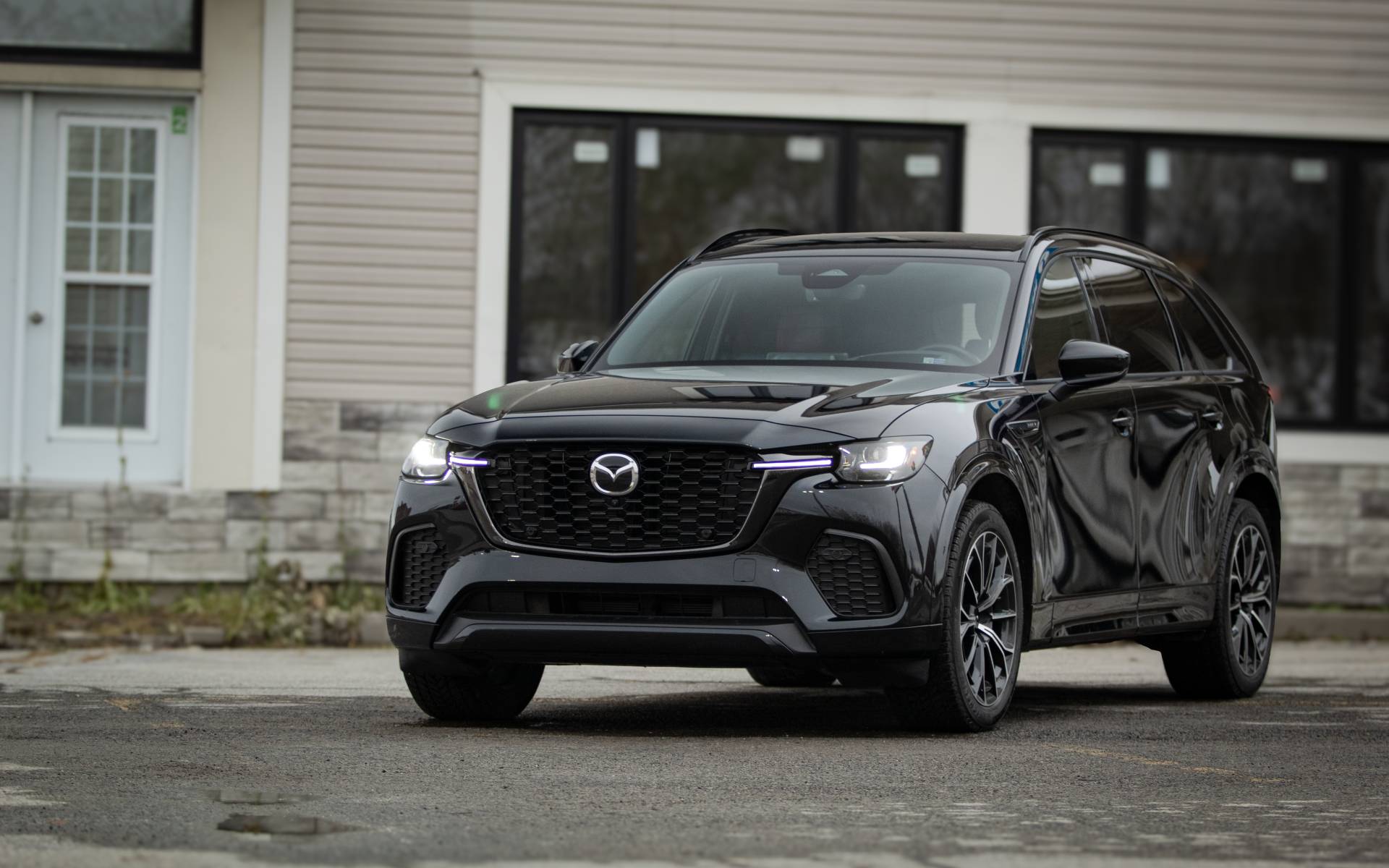

Introduced a year ago, the Mazda CX-70 two-row midsize crossover is receiving an update for 2026. It now features blacked-out badges on the sides and rear, although the logo up front stays the same as it incorporates a series of sensors, the company told us.
Additionally, the lineup is expanding to eight models. Half of them boast a six-cylinder engine with mild hybrid (MHEV) technology, while the other half use a plug-in hybrid (PHEV) powertrain. Units are scheduled to arrive at dealerships extremely soon, and the Mazda Canada website will be updated in the coming weeks.
Read also
- 2026 Mazda CX-70 Adds New PHEV Models, Boosts EV Range
- AJAC Hands Out 2025 Innovation Awards to Lucid, BMW, Mazda
Elegant Cabin
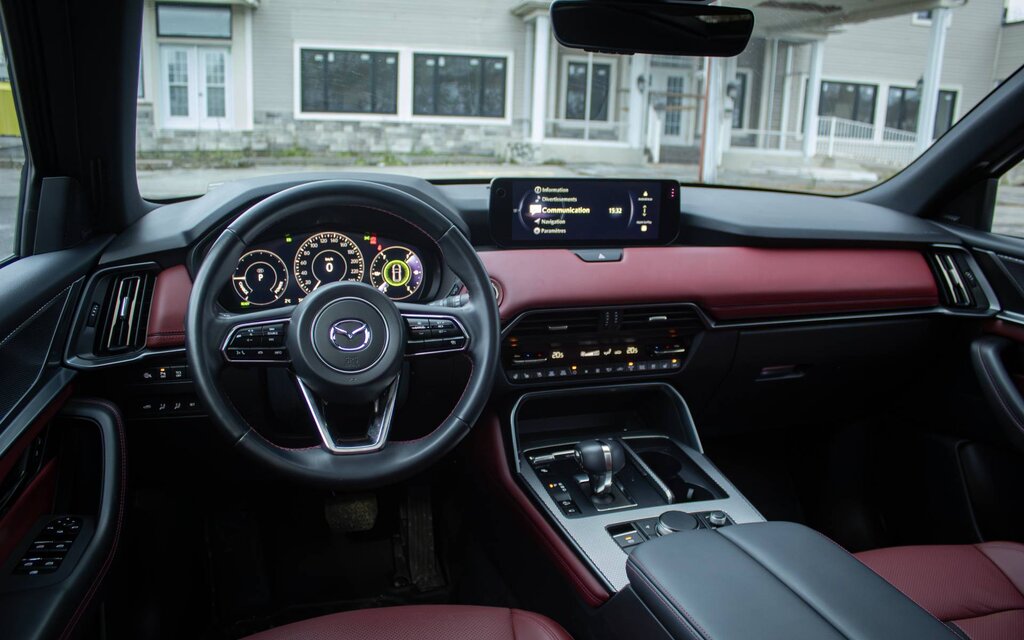
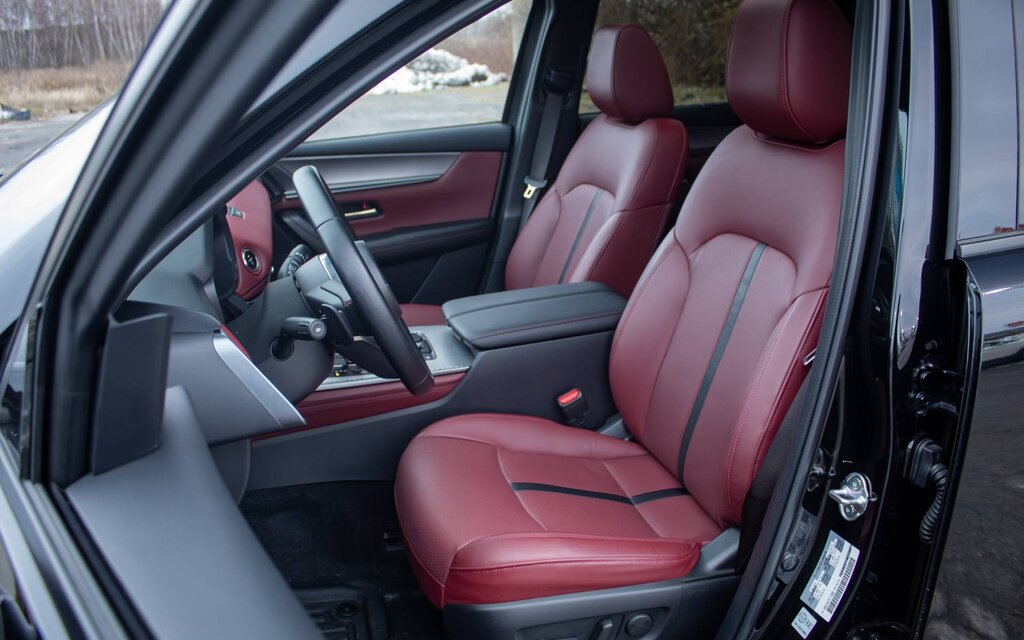
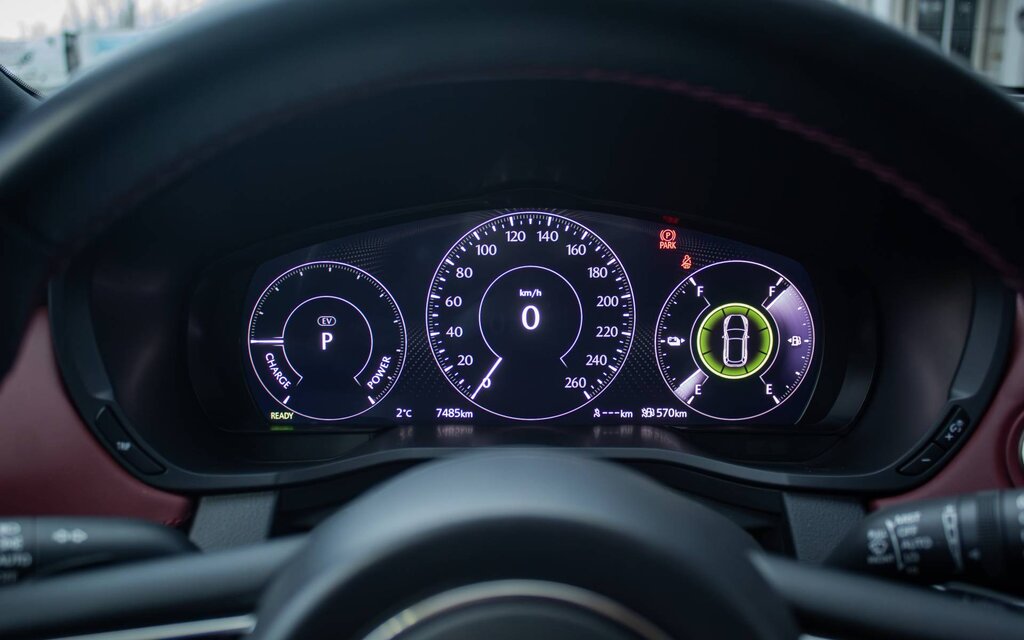
The 2026 Mazda CX-70's cabin impresses with superb fit and finish. The design is clean and all the controls are centralized, maximizing ergonomics. With the new 12.3-inch infotainment touchscreen, you can skip the rotary controller on the centre console if you want, which is a good thing. Meanwhile, the 7-inch digital instrument cluster facing the driver is just as gorgeous as it is user-friendly.
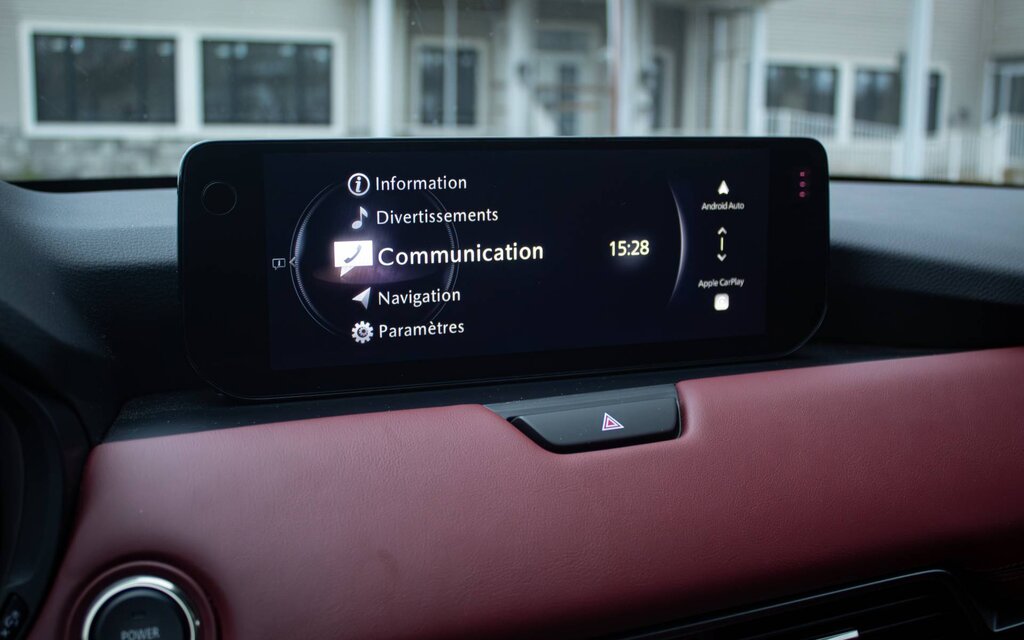
We did notice a few minor glitches during our test drives. For example, some indicator lights disappeared from the instrument cluster. Also, the multimedia and Apple CarPlay interfaces froze on a couple of occasions. Music lovers will love the available Bose sound system available on select models, however.
Standard content includes a sunroof, heated steering wheel, heated seats, wireless charging for smartphones, power liftgate and steering-sensing headlights. The CX-70 also comes with a wide array of safety and driver-assistance technologies that prove convenient yet sometimes intrusive. Oh, and it earned a Top Safety Pick+ award from the U.S. Insurance Institute for Highway Safety (IIHS) last year.
Athletic Handling
Despite its imposing size, the Mazda CX-70 remains an athletic SUV. It's based on a RWD-biased architecture—like those at BMW, Genesis and Mercedes-Benz—resulting in a sporty feel and impeccable road holding for such a heavy vehicle.
The CX-70 shines when it comes to attacking corners. Credit goes to Mazda’s i-ACTIV all-wheel drive system, which optimizes power distribution between the wheels, and the roll stabilization system that manages the suspension and braking to fight the high centre of mass and minimize body movements. Furthermore, steering is firm yet precise.
The powertrain, whether in MHEV or PHEV configuration, is a willing performer, although the 8-speed automatic transmission tends to shift quickly at low speeds and could be smoother in its operation. A gentle foot is required when braking because the pedal is very sensitive at first (but easier to modulate the rest of the way).
Different Levels of Electrification and Power
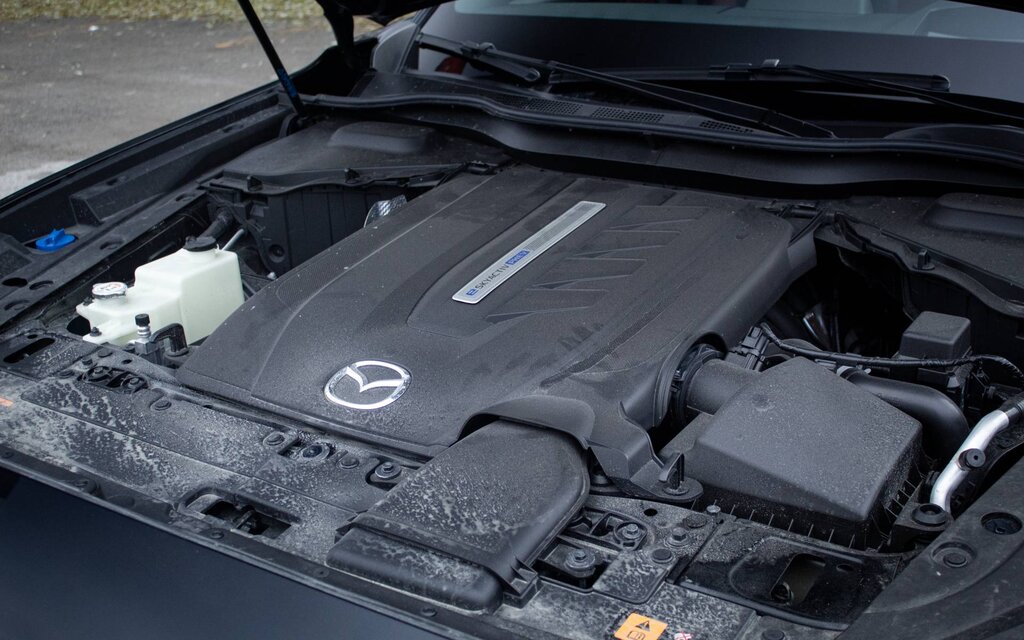
If you're looking for flexibility and a more muscular sound, we recommend the turbocharged 3.3-litre six-cylinder engine with mild hybrid technology. Available in two configurations, it produces 280 horsepower and 332 lb-ft of torque in the GS-L (MSRP starting at $49,750) and GT ($54,350) models. These figures increase to 319 horsepower and 369 lb-ft for the GT-P ($58,300) and Signature ($62,300) models. We drove the last one back in the summer and achieved 9.1 L/100 km in combined city and highway driving. Maximum towing capacity, by the way, is rated at 5,000 lbs.
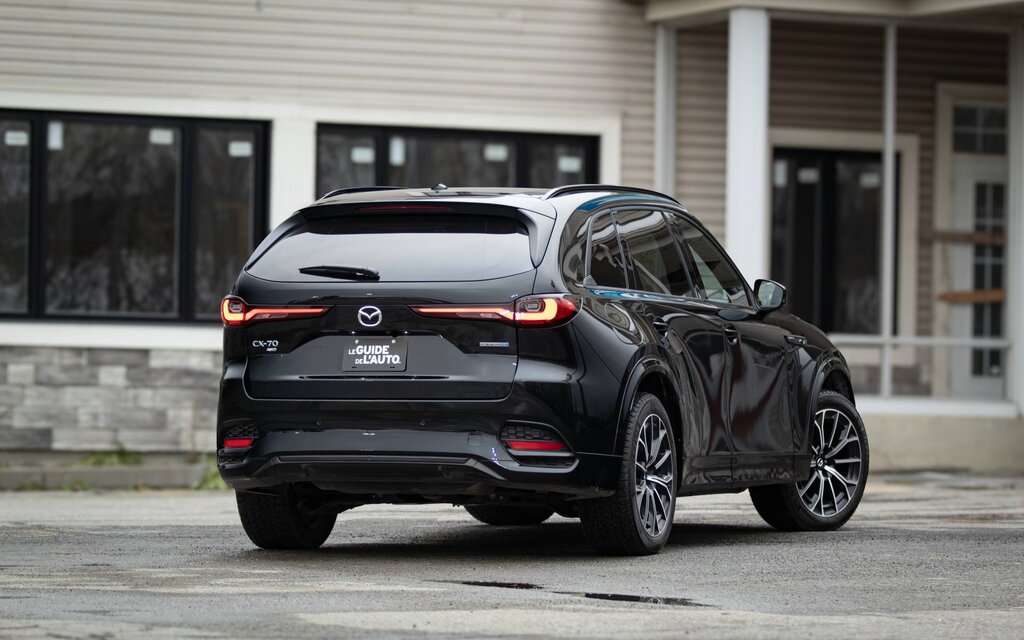
The CX-70 PHEV is not quite as pleasant to drive but makes up for it with higher fuel economy. This one pairs a naturally aspirated 2.5-litre four-cylinder engine producing 189 horsepower with a 173-horsepower electric motor sandwiched between the combustion engine and the transmission. You'll feel the gear shifts even when the vehicle runs on pure battery power, thus creating a more natural and more engaging driving experience. Total system output and torque are 323 horsepower and 369 lb-ft, respectively, and towing capacity drops to 3,500 lbs.
For 2026, the CX-70 PHEV’s lineup welcomes two new models including GS-SC ($52,750) and GS-L SC ($56,750). Both offer 51 km of electric range, longer than the 43 km enabled by the GT ($61,350) and Signature ($68,300). This was achieved through software calibration revisions and weight reduction in strategic areas, as Mazda Canada explains.
We'll have to wait a bit more to validate their range in real-world conditions since they have yet to show up in the press fleet. In the meantime, we can tell you that our GT model yielded an average fuel consumption of 6.5 L/100 km and a maximum range of 47 km in summer-like weather. Curiously, we did another test drive at the beginning of winter when temperatures fluctuated between -6 and 6 degrees Celsius, and the same model ended up with a score of 5.7 L/100 km (including 29-38 km of zero-emission driving).
One final thing you need to know is that it takes just over two hours to fully charge the 17.8kWh battery using a level-2 charger. If you don't have a home charging station, the portable charger included as standard needs 6.4 hours to charge the battery from 20-80%.
Sales on the Rise
The Mazda CX-70 has gained ground on other two-row midsize SUVs since launching in 2024 as a 2025 model. Right now, only the Subaru Outback and GMC Acadia outsell it. This growth, in our opinion, can be attributed to its overall quality, dynamic handling and sharp looks. The company’s 3-year/unlimited-km vehicle warranty also works in its favour. As far as our team at The Car Guide is concerned, the CX-70 is one of the best buys in the segment.