2025 Chevrolet Blazer EV SS: Fast But Not So Furious
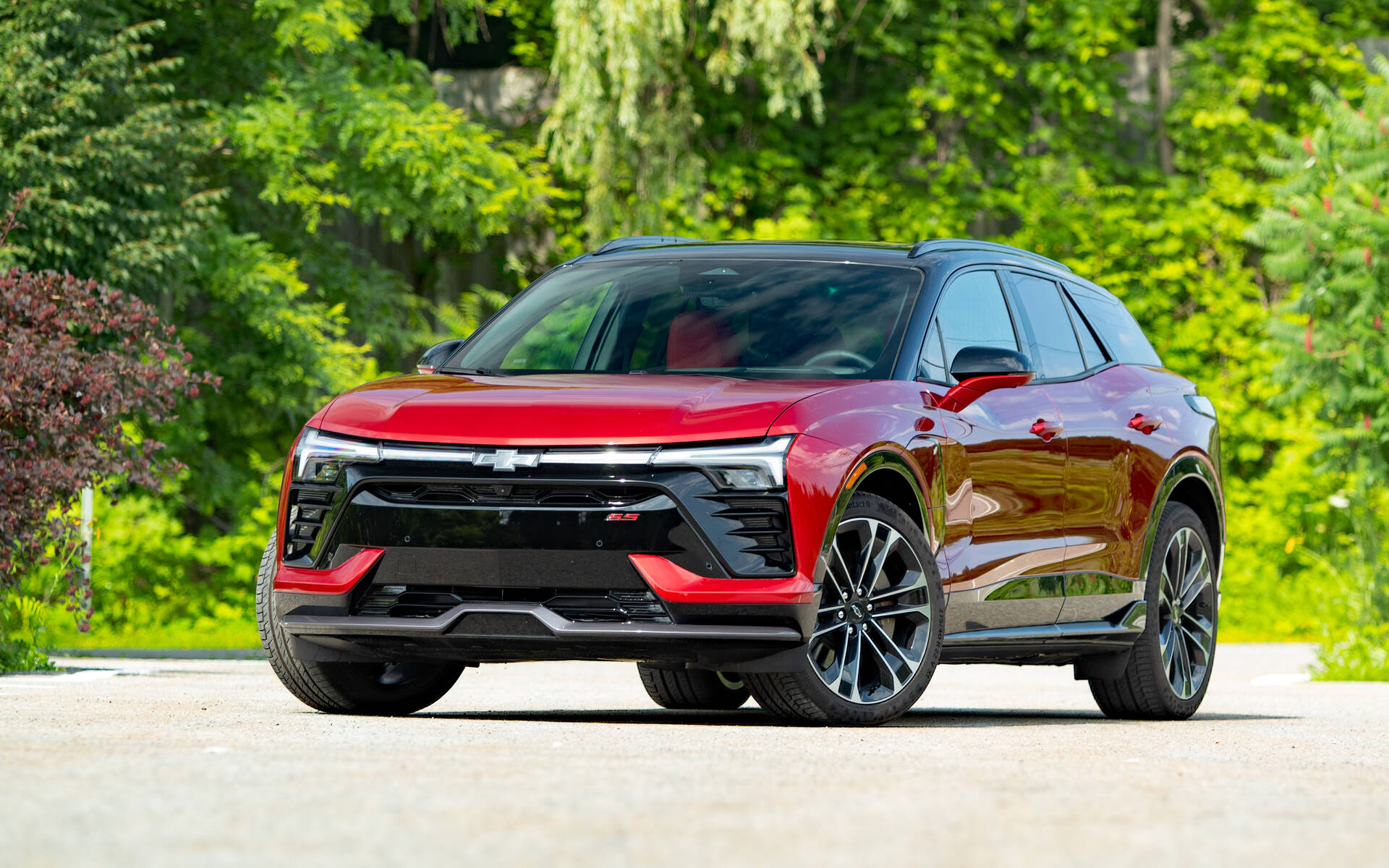

Life is mostly good at General Motors this year despite the tariffs imposed by the U.S. government. Chevrolet, in particular, posted a 13.9-percent increase in sales in the first half of 2025 and is leading the automaker’s electric offensive with the Equinox EV.
Unfortunately, the Blazer EV is having a harder time. Sure, it’s larger and more powerful, and it offers more trim levels and drivetrain options. In fact, it's one of the few vehicles on the market available with rear-wheel drive (RS), front-wheel drive (LT and RS) and all-wheel drive (LT, RS, and SS) at the same time. As previously reported, however, the longest-range model—the one with rear-wheel drive—won’t return for 2026.
Read also
- Top 10 Most Powerful American SUVs in 2025
- GM Makes Major Plant Announcements Including Next-Gen Products
For our impressions of the mid-grade Blazer EV RS, we invite you to read our colleague Louis-Philippe Dubé’s review. Here, we will focus on the Super Sport (SS) performance model at the top of the lineup. Our tester costs $76,898 including all fees and $3,600 worth of options.
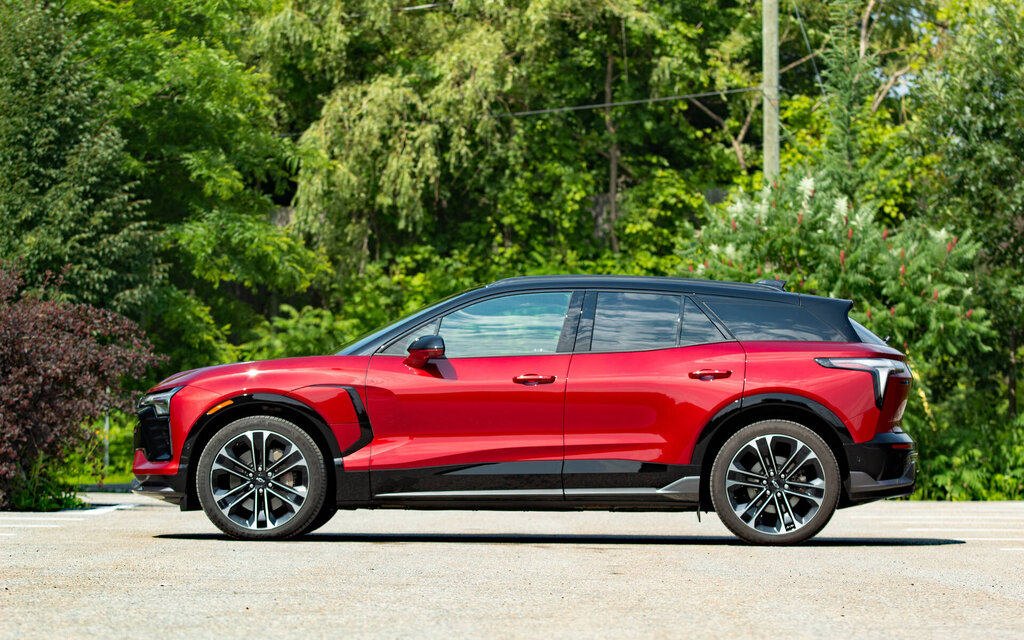
Spacious and Accommodating
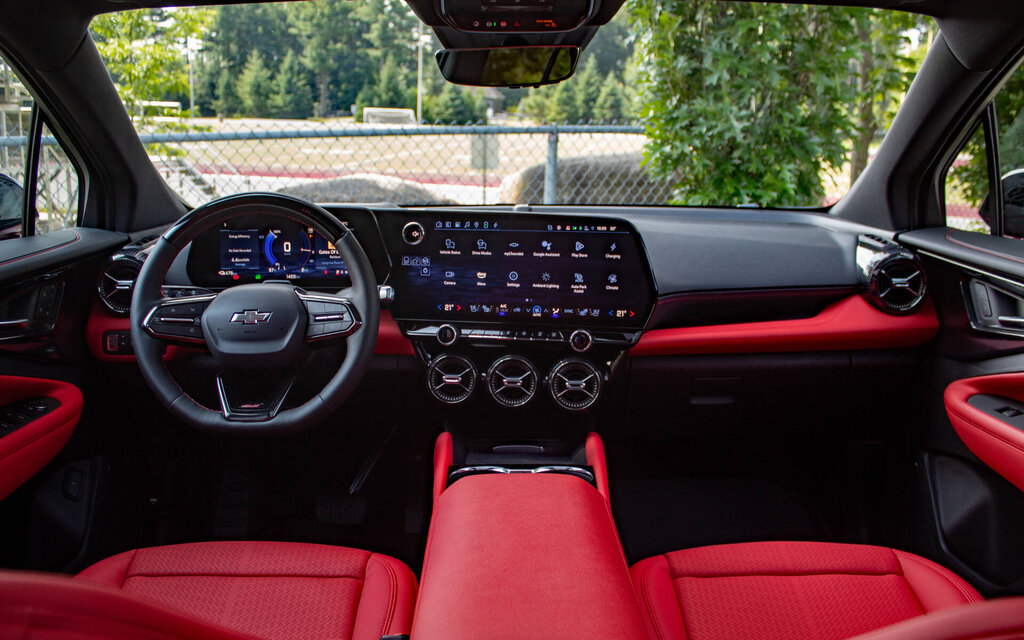
The Blazer EV's interior is particularly well-executed in terms of styling, fit and finish. This applies to both the gray/black theme and the red one, although the latter is our favourite. The decor, enhanced by ambient lighting, is a brilliant showcase of modern design and ergonomics. The 11-inch digital instrument cluster and 17.7-inch infotainment touchscreen both display sharp, high-quality graphics and are quick to respond to driver input.
The controls are physical for the most part, but some vehicle functions such as the headlights and one-pedal driving can be found on the left part of the main screen for easy access. The Blazer EV’s infotainment system is not compatible with Apple CarPlay and Android Auto, instead using Google Automotive technologies natively. We didn’t mind, but some users might take offense, especially among the iPhone crowd. The Bose audio system, meanwhile, delivers good but not amazing sound quality.
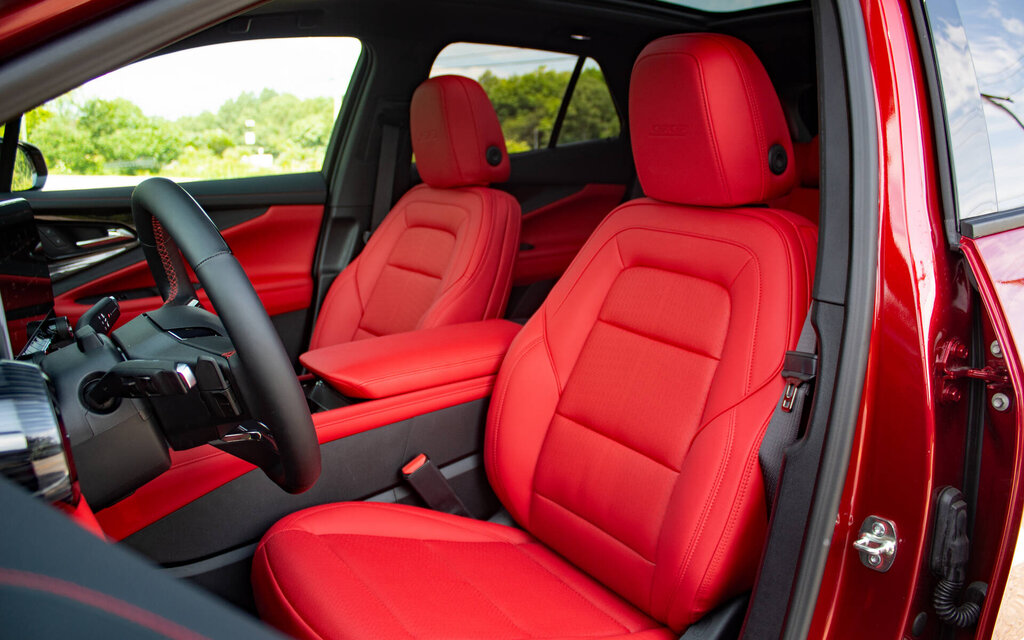
In terms of comfort, there is ample space for passengers both front and rear. Ditto for cargo. By the way, the large trunk contains an additional compartment for storing the charging cable, but forget about storage under the hood. The seats provide little support, which is a bit ironic given the vehicle's sporty aspirations. The seat bottom is firm, but proves surprisingly comfortable during long trips. On the other hand, the headrest is annoying because it tilts forward and prevents the upper part of the driver’s back from resting properly against the seatback.
Unlike other Blazer EV models, which can tow between 1,500 lbs and 3,500 lbs, the SS cannot. The folks at Chevrolet told us this was a design choice aimed at simplifying components. And in any case, according to them, the majority of customers won't be using this vehicle for towing purposes.
Geared for Performance
Despite its imposing size, the Blazer EV is surprisingly agile—until the laws of physics catch up with it. The suspension is firm, which gives it a sporty feel without compromising comfort. The vehicle’s considerable weight is felt through the steering wheel. Steering is heavy but remains precise.
Visibility is adequate, though not so much in the rear. The good news is that the digital rearview mirror significantly reduces blind spots. On the flip side, the tiny rear wiper is of little use when it's raining or snowing.
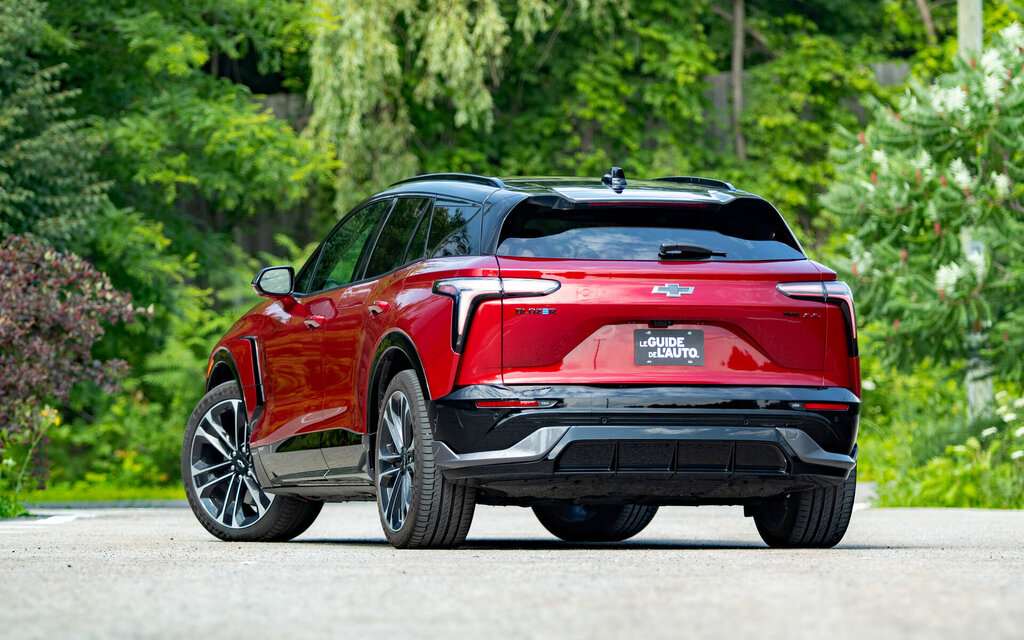
When the name of the game is performance, the Blazer EV SS doesn't disappoint, for sure. Its dual motors can generate up to 615 horsepower and 650 lb-ft of torque in Wide Open Watts mode (activated via the infotainment system). This enables 0-100 km/h acceleration in less than four seconds. Moreover, regardless of the drive mode you select, power is delivered progressively and never in a violent way, even from a dead stop.
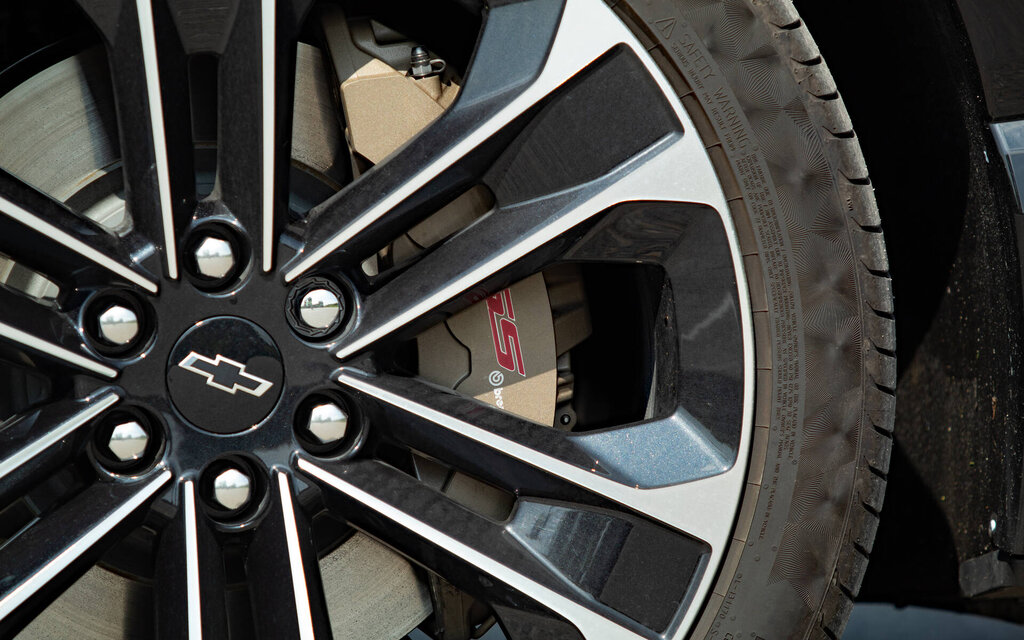
As for braking, the most potent Blazer EV of all relies on six-piston Brembo brakes at the front, while the steering wheel-mounted paddle shifter allows you to adjust the level of energy recuperation.
The Ultium Test
The Blazer EV SS is based on the Ultium platform, which in this case accommodates a 102kWh battery. It promises a range of 488 km, which is more than achievable, the result of an average energy consumption of 24.7 kWh/100 km according to Natural Resources Canada.
During our week with the Blazer EV SS, we recorded a combined 22.73 kWh/100 km—or 4.4 km/kWh as indicated by the on-board computer, which is an unusual way of measuring efficiency (like the EV equivalent of mpg). Too bad it's impossible to change it through the settings. City driving dropped energy consumption below 18 kWh/100 km, while highway trips netted 23.26 kWh/100 km. Considering the vehicle’s size, weight and performance, these numbers are quite reasonable.
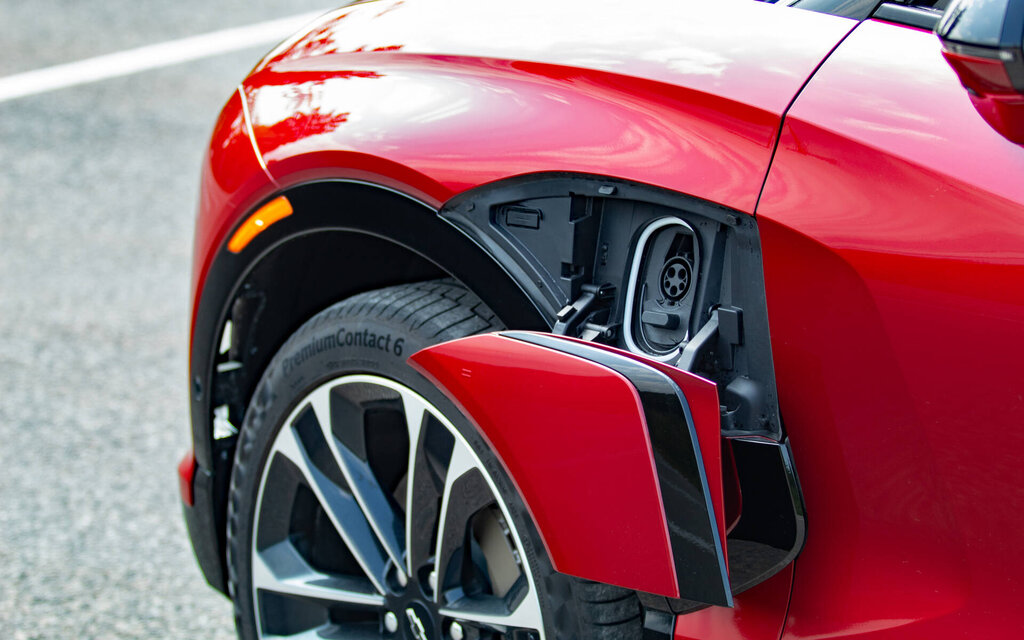
The bowtie-wearing electric SUV has a charge port hidden behind a huge door that covers a good portion of the driver's side fender. This charge port door oddly looked flimsy to us, as did its opening mechanism. However, following a search on online forums, this doesn't seem to be a problem for most owners, although one would assume the door could easily jam during winter. By the way, replacing it isn't cheap: the operation will cost you just under $550.
The Blazer EV SS can handle a maximum charge of 190 kW. When plugged into a 350kW DC charger with 55 percent of battery capacity remaining, it managed to extract 123 kW during our test. GM estimates that it is possible to recover 127 km of range in 10 minutes under optimal conditions. What about charging at Tesla Superchargers? Chevrolet dealers can sell you an NACS adapter for $325. Alternatively, a home charging cable (with 120V and 240V connectors) is included with the vehicle.
Not the Best Chevrolet EV
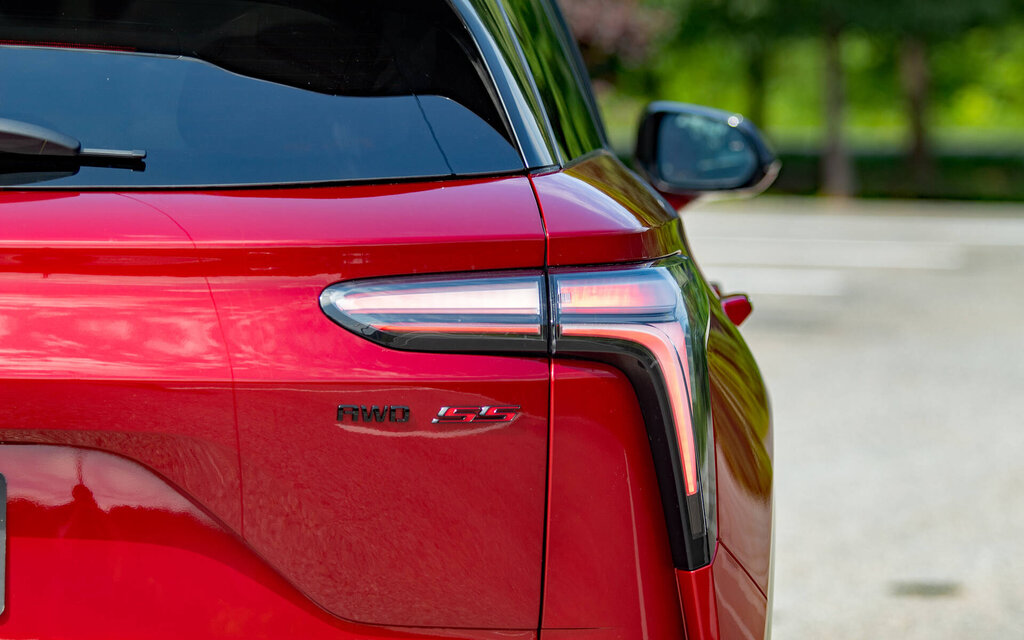
With the automotive industry evolving so fast, the Blazer EV isn't keeping pace. The Equinox EV offers similar range (463-513 km versus 455-538 km for the Blazer EV) and its size is versatile enough for consumers. In fact, it’s the same situation over at Cadillac, where the new Optiq is already posting stronger sales than the Lyriq. Simply put, the smaller and cheaper of the two appeals to more buyers.
Granted, the Equinox EV and Blazer EV aren't aimed at the same people, but there's no denying this fundamental truth: people are looking for simplicity and lower costs (monthly payments, maintenance, etc.). While competent, especially in SS trim, the Blazer EV’s extra size and higher price tag—among other reasons—seem to hurt it. And despite boasting a larger battery, it won’t take you much farther than the less expensive Equinox EV.