We Drove A Kei Car in Japan, Here’s What It’s Like

Tokyo, Japan—The Japanese car market is nothing like Canada’s. Even though some vehicles sold here can also be found on Japanese roads, there’s a large number of models from the Land of the Rising Sun that we never get.
A great example is the so-called kei cars, derived from the Japanese word Keijidōsha, which could be translated as "light car," although it doesn't quite have the same meaning on both sides of the Pacific Ocean. Specific regulations govern the production of these vehicles. By modern Canadian standards, they would be classified as ultra-lightweight vehicles.
Read also
- Toyota Opens ‘Woven City’ in Japan to Test Future Mobility Solutions
- 2025 Japan Mobility Show: Our Mega Photo Gallery
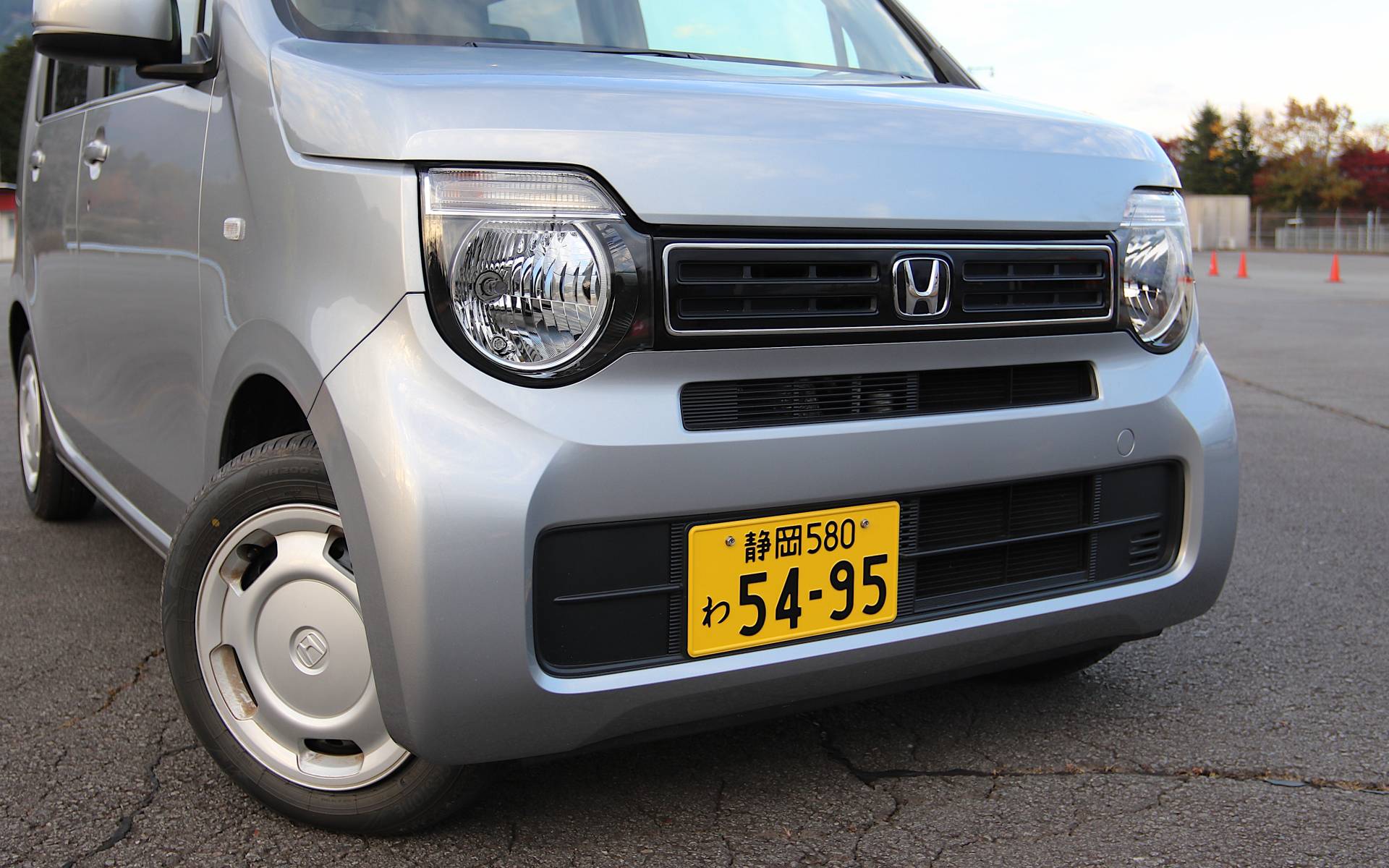
You see, kei cars cannot exceed 3.40 metres in length, 1.48 metres in width and 2 metres in height, making them 23 cm shorter and 20 cm narrower than the diminutive Fiat 500e. But that's not all: engine displacement cannot exceed 660 cc and output must be 47 kW (63 horsepower) or lower. Another key difference (pun fully intended) is that these cars are distinguished from others by their license plates—yellow on privately owned cars and black on commercial vehicles. Furthermore, they offer fiscal advantages, with owners paying less to own a kei car than a regular vehicle.
While they might seem like a cute and amusing anomaly from a North American perspective, kei cars address several issues in Japan. As you probably know, the Japanese islands are extremely densely populated—the Tokyo metropolitan area alone is equivalent to all of Canada! This very high population density means that parking is scarce, and when it is available, spaces are narrow and short. The same is true for city streets, some of which barely leave room for a vehicle. Finally, Japan is a heavily industrialized country that imports almost all of its energy, so authorities feel the need to limit fuel consumption for private cars.
A (Super) Tiny Honda
During the time we spent covering the 2025 Japan Mobility Show in late October-early November, we deliberately opted to rent a kei car, which also happened to be the cheapest option available from the rental company. At $61 per day (excluding insurance), the price was quite tempting.
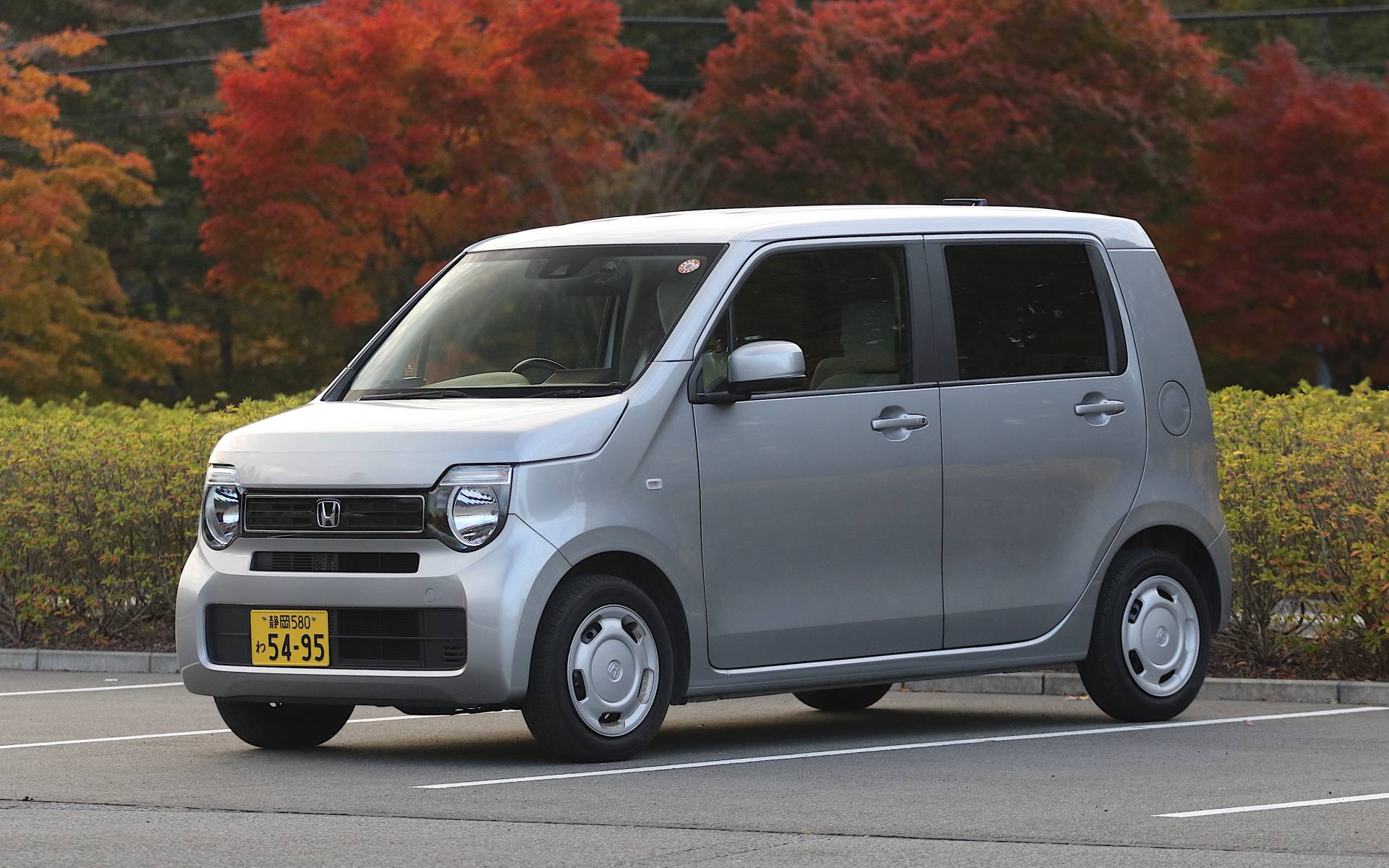
Many Japanese manufacturers sell these cars, such as Nissan, Mitsubishi, Suzuki, Daihatsu, Mazda and Subaru. We ended up with one of Honda’s N-series vehicles—sadly not the N-One that is reminiscent of the now-discontinued Honda e Canadian drivers never got the opportunity to purchase, but rather a Honda N WGN. Despite what the name implies, this car looks nothing like a wagon.
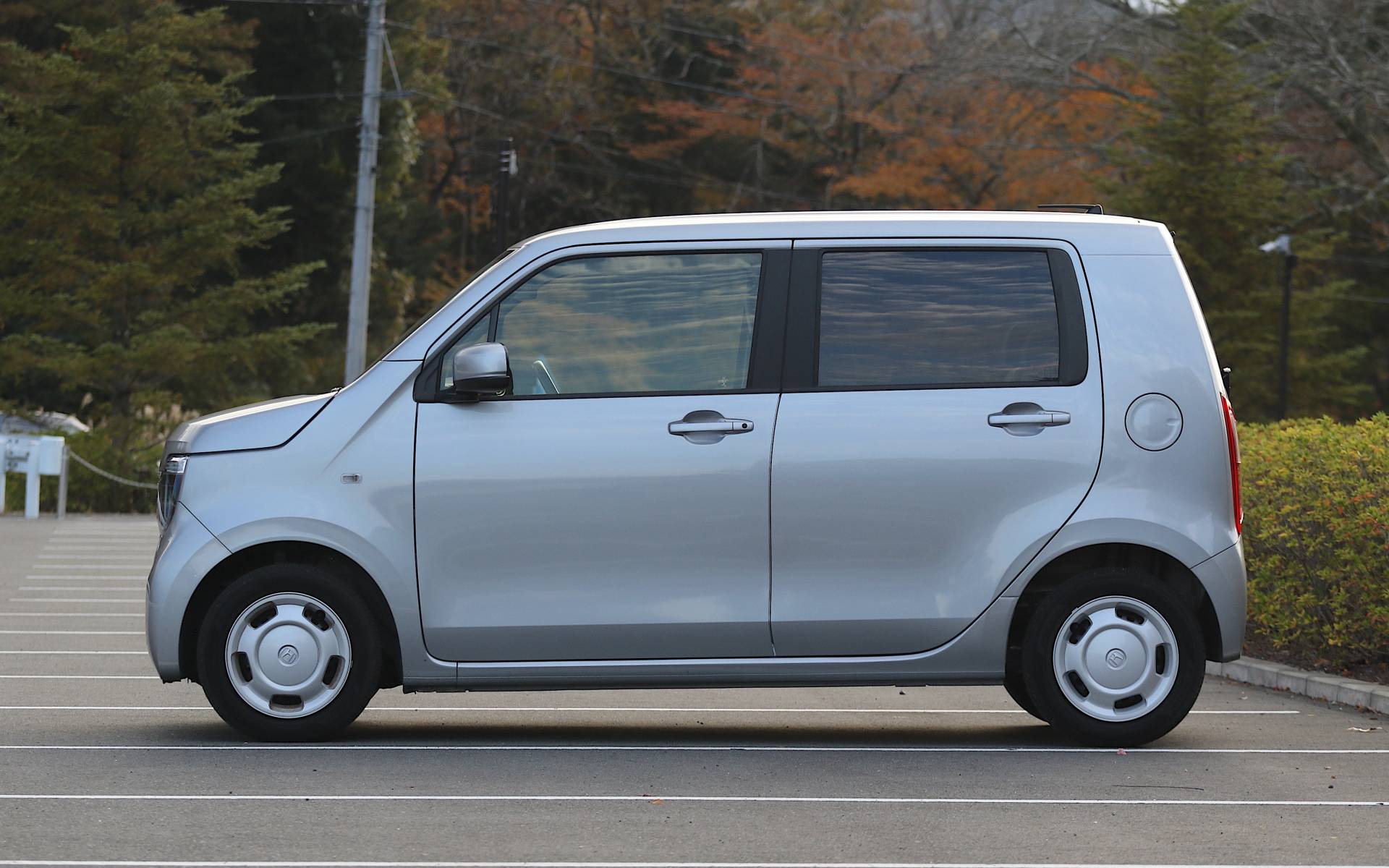
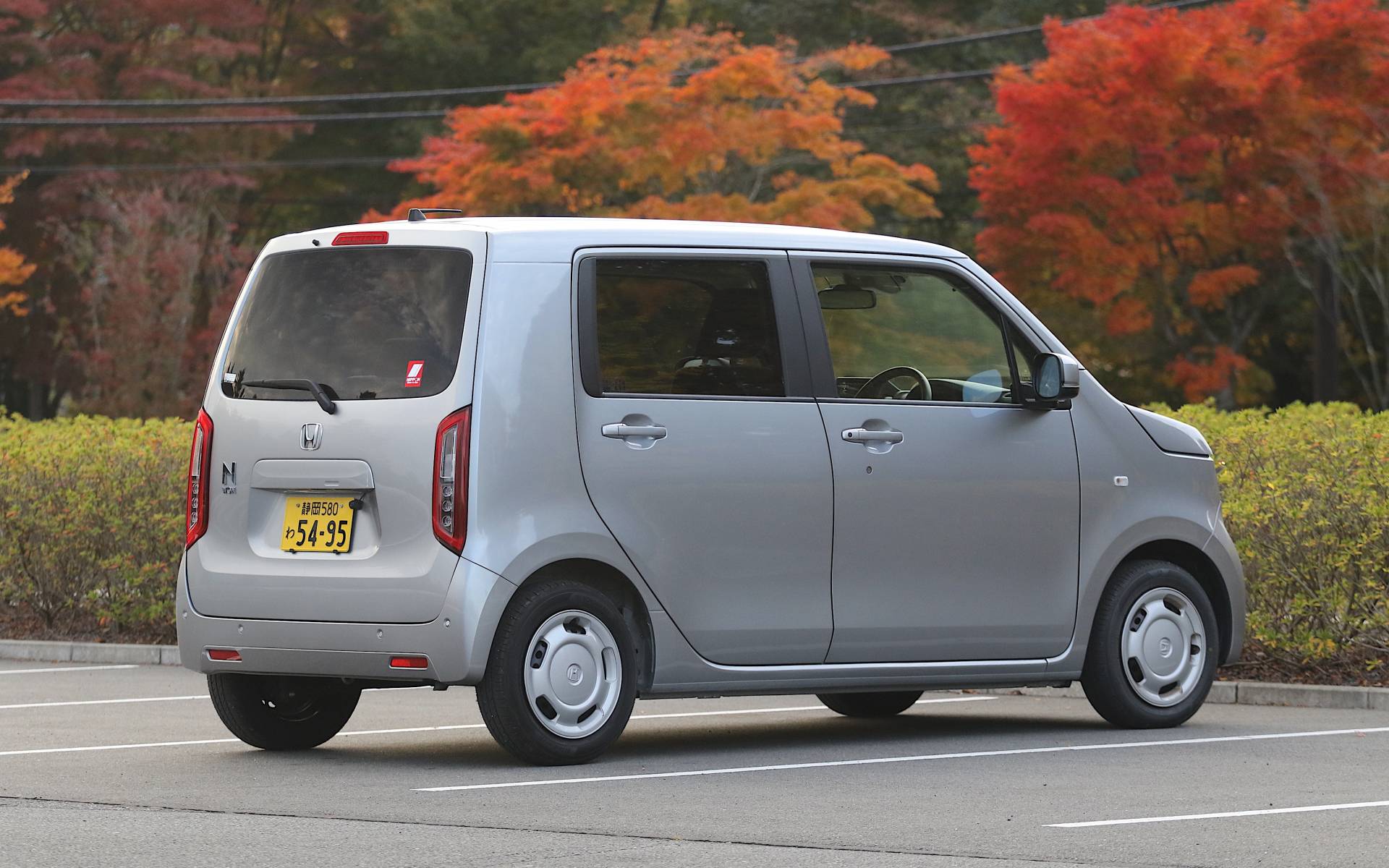
The N WGN is 3.40 metres long and 1.48 metres wide, but at 1.68 metres tall it doesn’t come close to the maximum height allowed. It also has four small wheels pushed to the corners—not 12-inch units as you may have guessed based on the pictures, but actually 14-inch wheels. However, the tires are the kind of size (155/65R40) we used to see back in the 1970s or 1980s.
The hood is shockingly short, especially when you consider how far the driver's cockpit extends. The car weighs a mere 850 kg and the engine is a 660cc inline three-cylinder unit that produces 58 horsepower (slightly below the legal limit) and a modest 48 lb-ft of torque. By comparison, the now-discontinued Mitsubishi Mirage delivered 78 horsepower and 74 lb-ft. Output is handled by a continuously variable transmission.
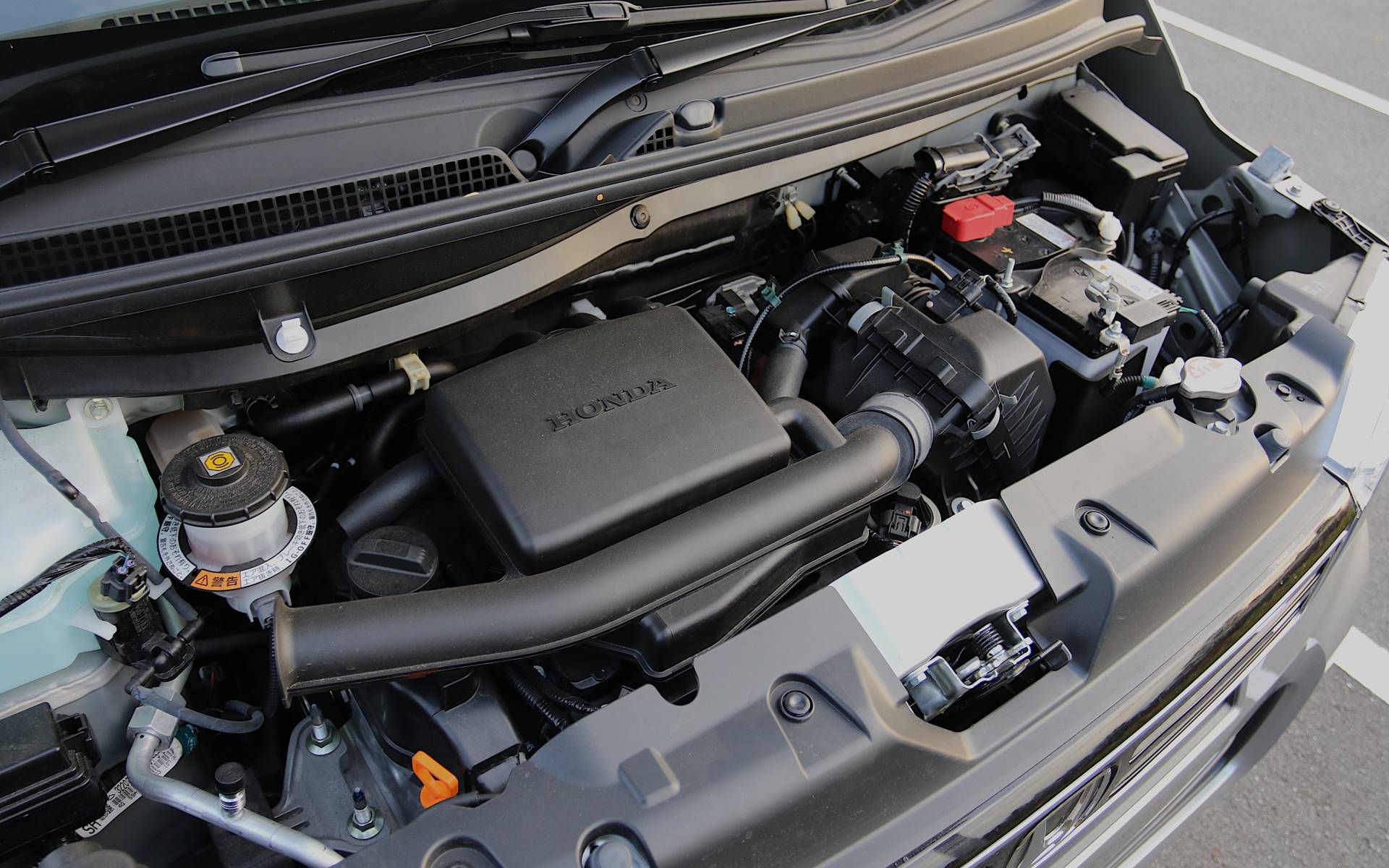
Just so you know, Honda’s N-series also offers turbocharged models that pack 63 horsepower and 77 lb-ft of torque, not to mention all-wheel drive.
Surprisingly Spacious
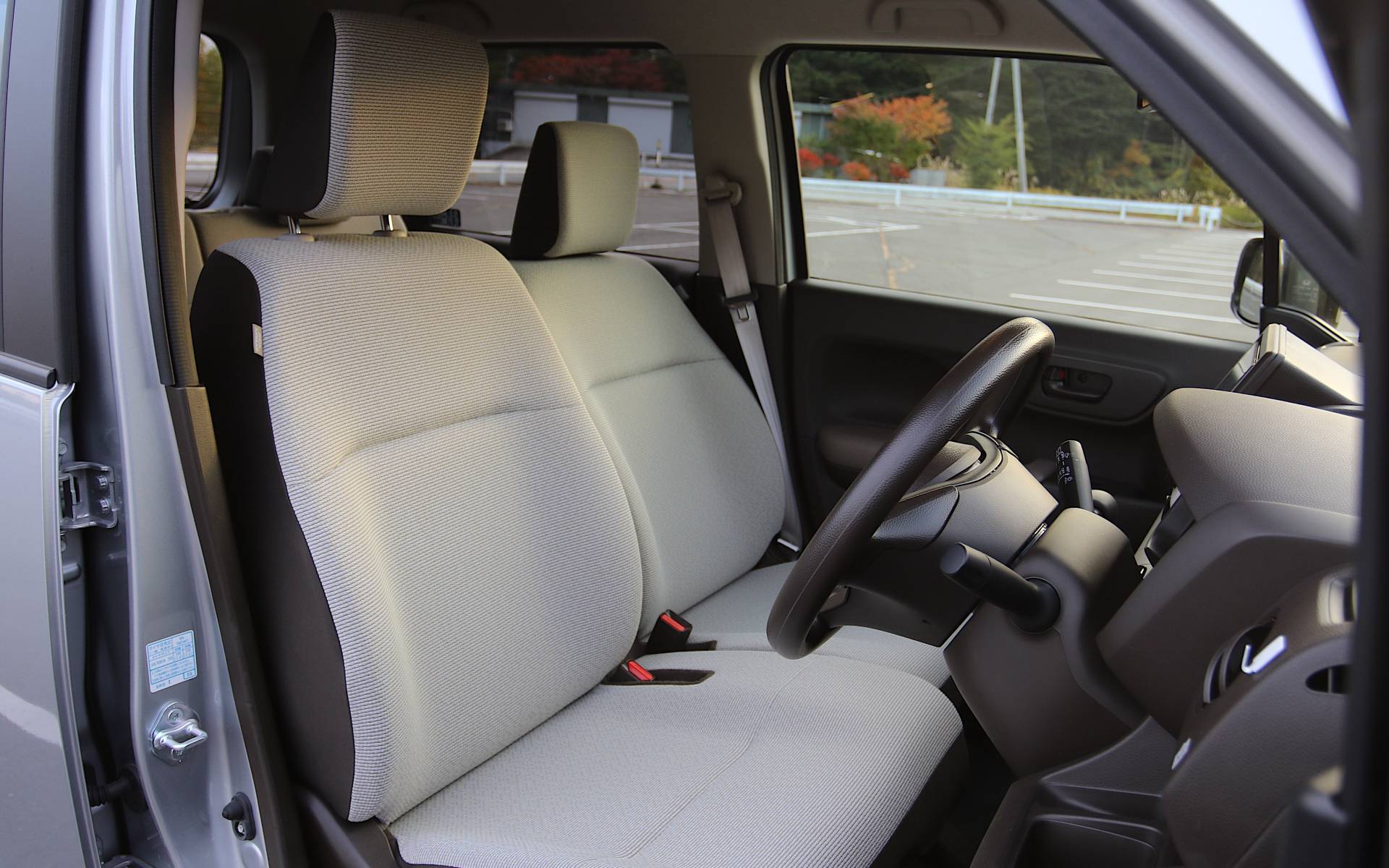
A kei car is the epitome of practicality, turning a minimal footprint into a maximum amount of space. The Honda N WGN is no exception, boasting a surprisingly roomy interior for its size, with four proper seats and excellent headroom. The front row has American boat-style seats with a very flat seat cushion that slides fore and aft (independently for the driver and passenger).
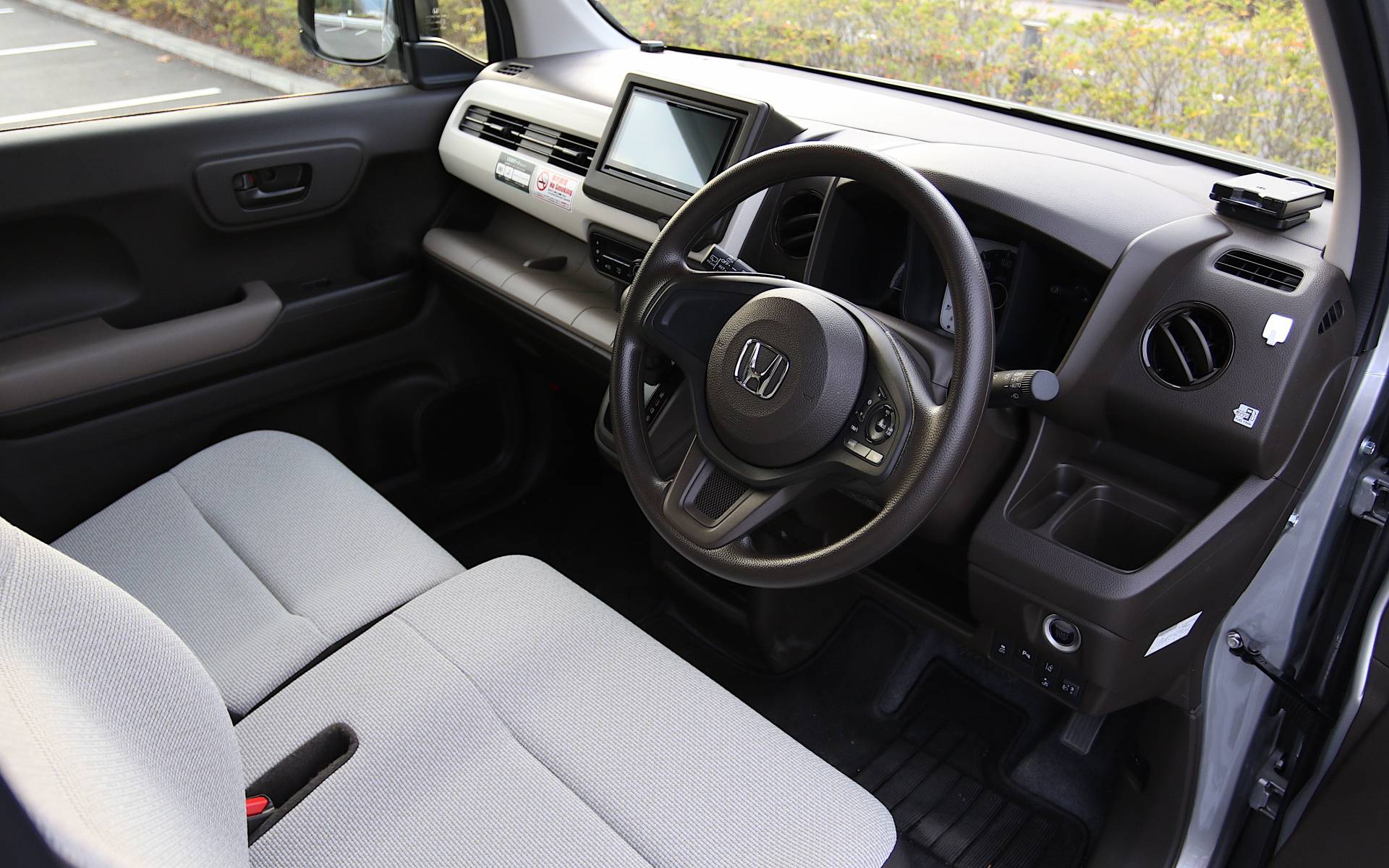
The upright and chunky dashboard is fairly straightforward. There’s an instrument cluster combining all the important functions, a dedicated location for your preferred navigation system and three gauges facing the driver. It's simple, but functional. On the other hand, compromises had to be made in order to sell the vehicle at a low price, such as hard plastics that feel cheap for the most part. The two-tone design does add a lively touch to the cabin, mind you.
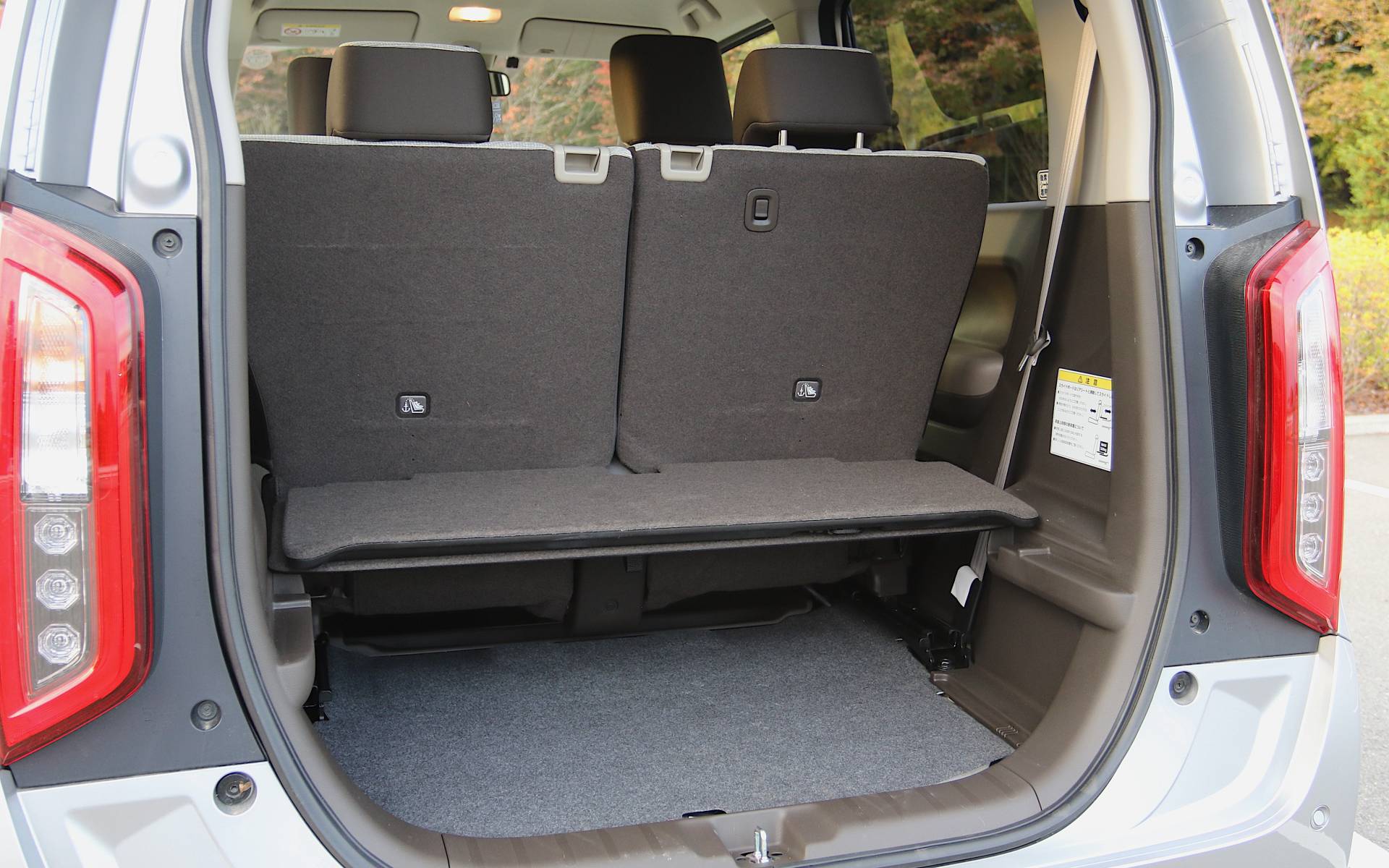
Elsewhere, the trunk is super easy to access thanks to the straight rear hatch that opens up completely and has a very low cargo floor. It’s not huge, obviously, but space can be reconfigured using two shelves that double as cargo covers to hide items from view.
Taking On Fujisan
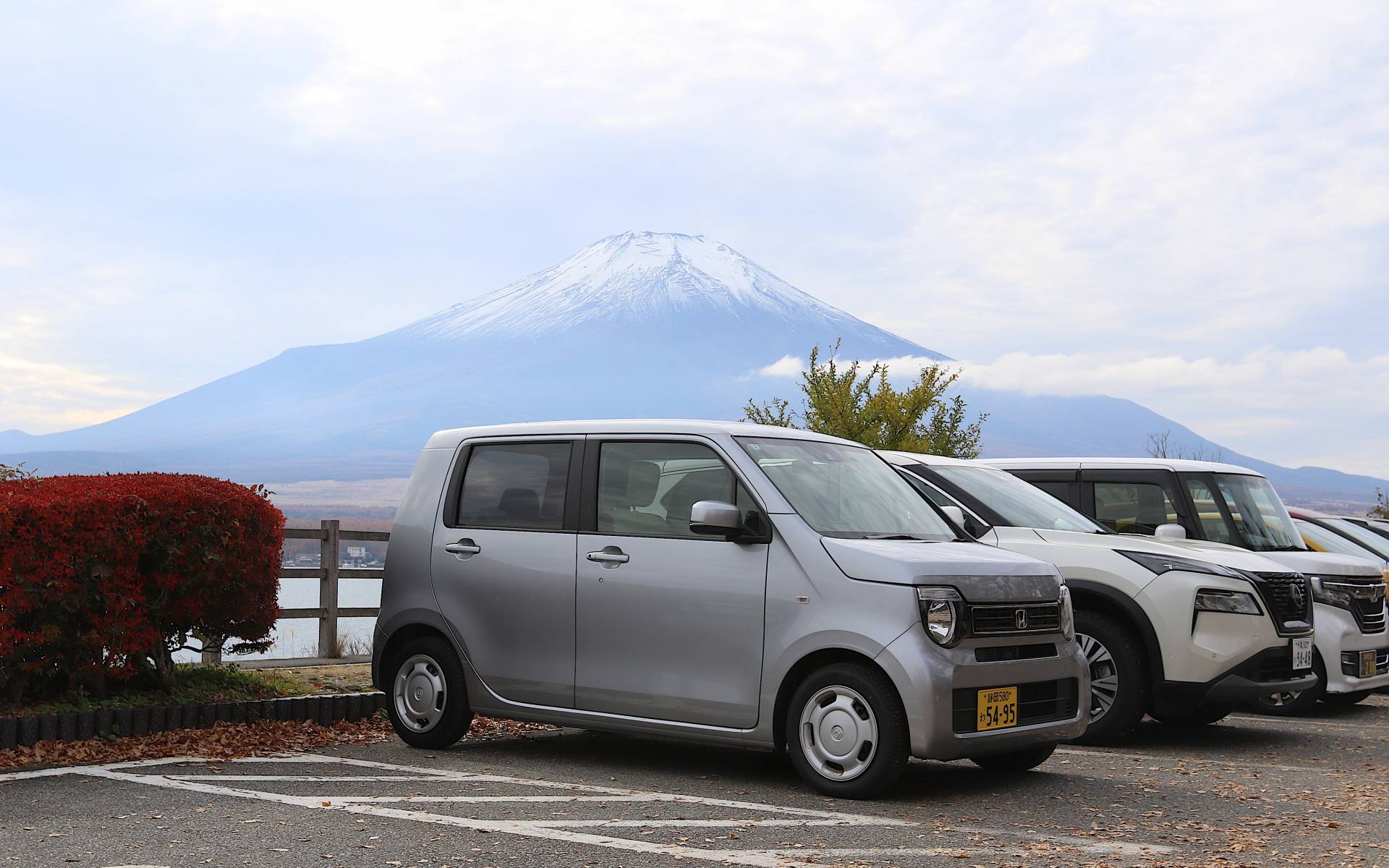
Mount Fuji, or "Fujisan" as the Japanese call it, is a sacred mountain and a powerful symbol of the country. Reaching an altitude of 3,776 metres, it is partially accessible by car. Any car? Well, factoring in the rarefied air and the engine’s low output, our Honda N WGN had its work cut out for it.
The engine isn't too loud at startup, which is a good thing because the sound is anything but intoxicating. As dedicated city cars, kei cars are right at home driving around town. The N WGN turns on a dime. We've never weaved through traffic so easily!
Up to 40 km/h, the car moves along without much hesitation. However, merging onto a fast lane requires some calculation. Acceleration from 40-80 km/h is pretty slow, and you have to pay close attention to regular cars already circulating on the highway. There was no wind during our test drive, so the little Honda proved stable despite its refrigerator-like aerodynamics.
The 660cc engine started to struggle the minute we had to climb the mountain at a steeper angle. Even with the pedal to the metal, it painfully revved up to 6,500 rpm and could not maintain speed. On the bright side, the absolutely gorgeous view of Mount Fuji was well worth all the effort.
Not That Fuel-Efficient
Since we’re true car enthusiasts, we naturally made a detour to the Fuji Speedway, a legendary track that has hosted international events such as Formula 1, WEC, Super GT, Super Formula and other races. The plan wasn’t to push the Honda N WGN to the limit on the tarmac, of course, but rather to take a tour of the museum. Don’t miss our photo gallery coming up soon.
For long-distance travel, getting around Japan is as pleasant by train as it is frustrating by car. Speed limits are low and drivers are generally very compliant with them. As a result, you can easily find yourself stuck behind a truck driving at 48 km/h for long stretches on a road with a 50 km/h limit. What’s more, a typical 35- or 40-kilometre trip can easily take an hour on secondary roads. Sure, a kei car makes things easier, but it still gets annoying when you're used to faster Canadian roads.
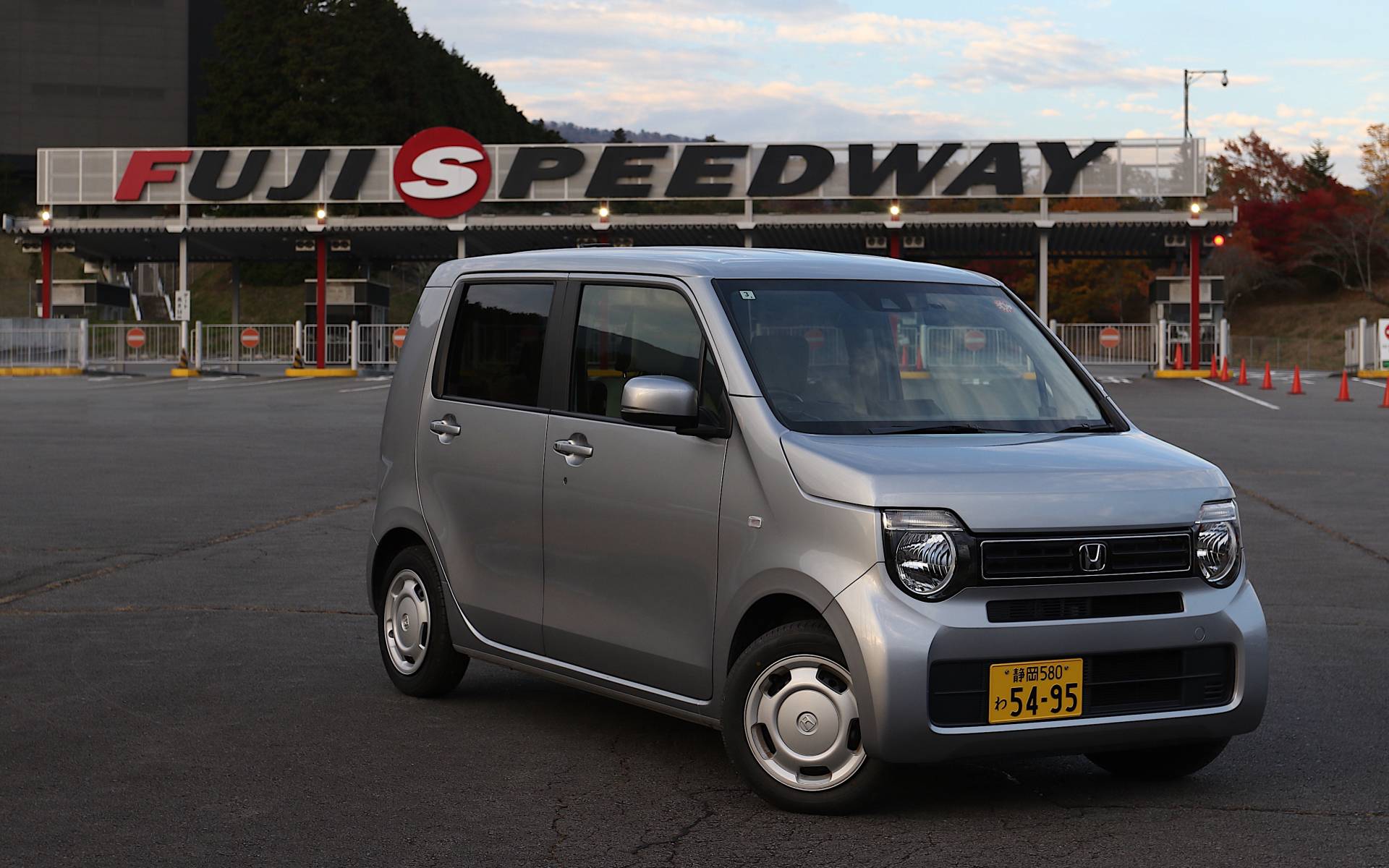
Our nighttime descent from Mount Fuji further demonstrated that the Honda N WGN has no sporty aspirations whatsoever. Engaging Sport mode via the shifter slightly improves throttle response, but as you might expect, it doesn’t work miracles. Furthermore, the car’s high centre of mass requires caution when tackling corners.
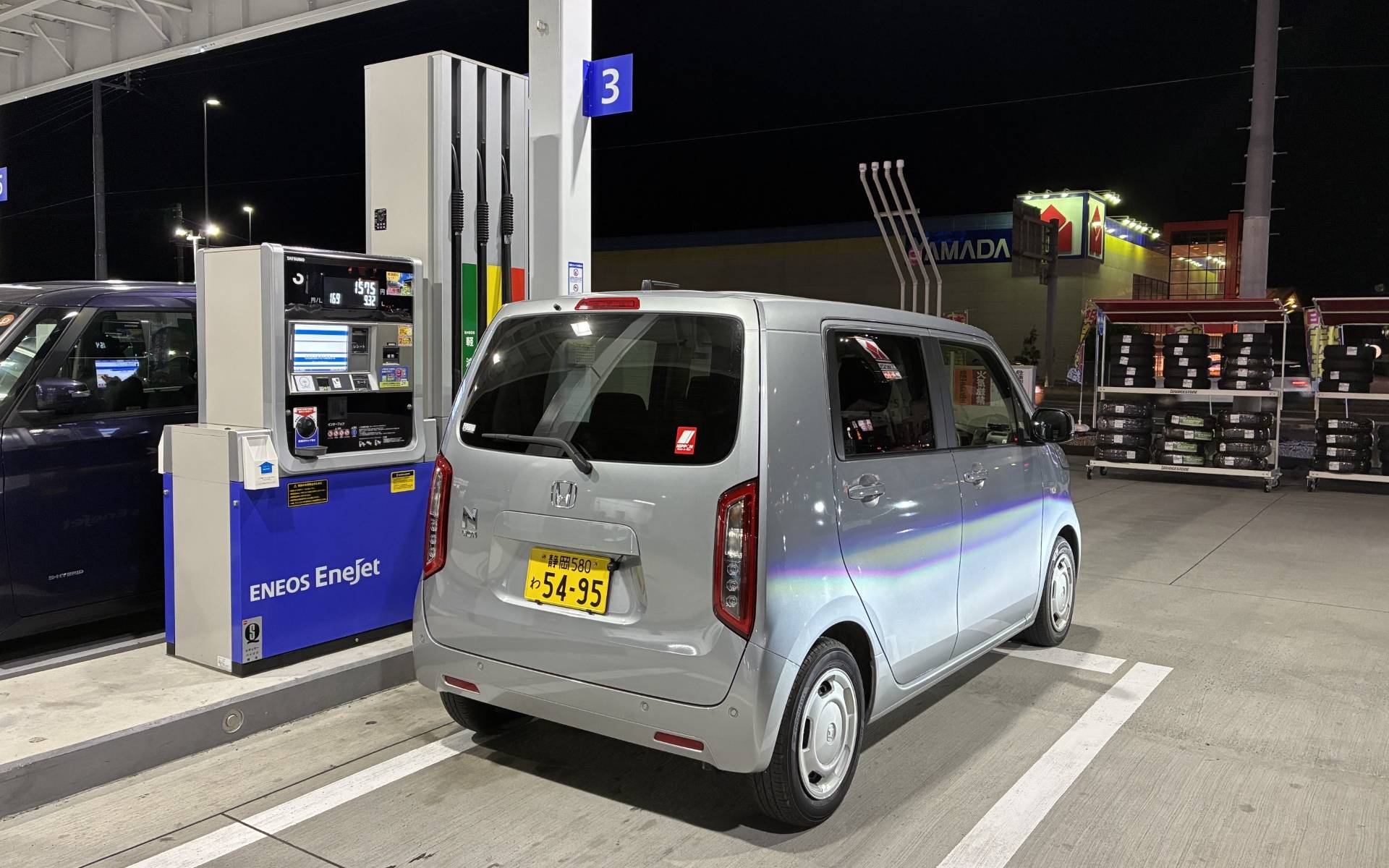
One more irritant came from the built-in GPS, which kept reminding us to respect speed limits even when the needle was only 1-2 km/h over. Then, before returning the keys, a quick stop at the gas station allowed us to calculate fuel consumption, which proved disappointing. Admittedly, driving up Mount Fuji put an extra load on the engine, but we recorded an average of 5.5 L/100 km—nowhere close to matching the figure advertised by Honda (3.5 L/100 km), and not what we expected from a tiny mill with just 58 horsepower.
Our Verdict
At the end of the day, it felt clear that kei cars are not suited to North America. Despite a very competitive price (our Honda N WGN tester retailed for the equivalent of $14,230 CAD including tax at the time of writing), they simply would not enjoy success in Canada.
That said, there are some interesting lessons to be taken from kei cars. We believe that some drivers in metropolitan areas around the country would embrace a small vehicle with a basic chassis and powertrain, decent equipment and available all-wheel drive.