1969 Dodge Charger Daytona: From the Track to the Road

As some of you may know, The Car Guide all started with a French-written annual book, Le Guide de l’auto, nearly 60 years ago. The latter proved an instant hit and eventually became the most trusted source of information for car enthusiasts in Quebec.
The book’s grand master, Jacques Duval, who sadly passed away last year at the age of 89, was a successful race car driver and renowned TV personality. One of his most iconic stories featured the 1969 Dodge Charger Daytona going full speed at Circuit Mont-Tremblant for a show called Prenez le Volant. Duval ended up writing a review for the 1970 edition of Le Guide de l’auto. Let’s just say he wasn’t very fond of the car.
Read also
- Four-Door Dodge Charger Daytona Officially Debuts as 2026 Model
- Dodge to Drop Entry-Level Charger Daytona R/T for 2026, Tariffs to Blame
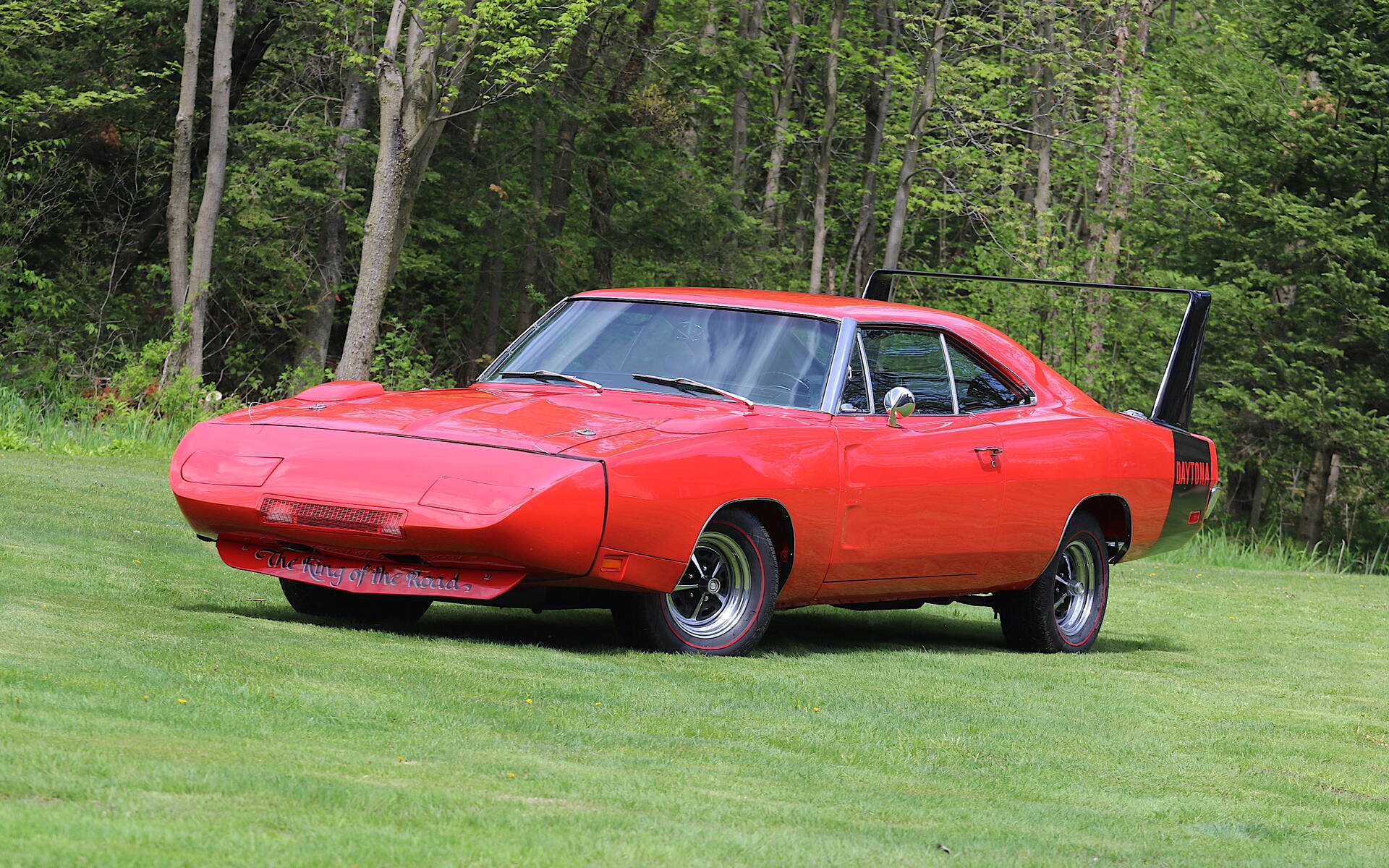
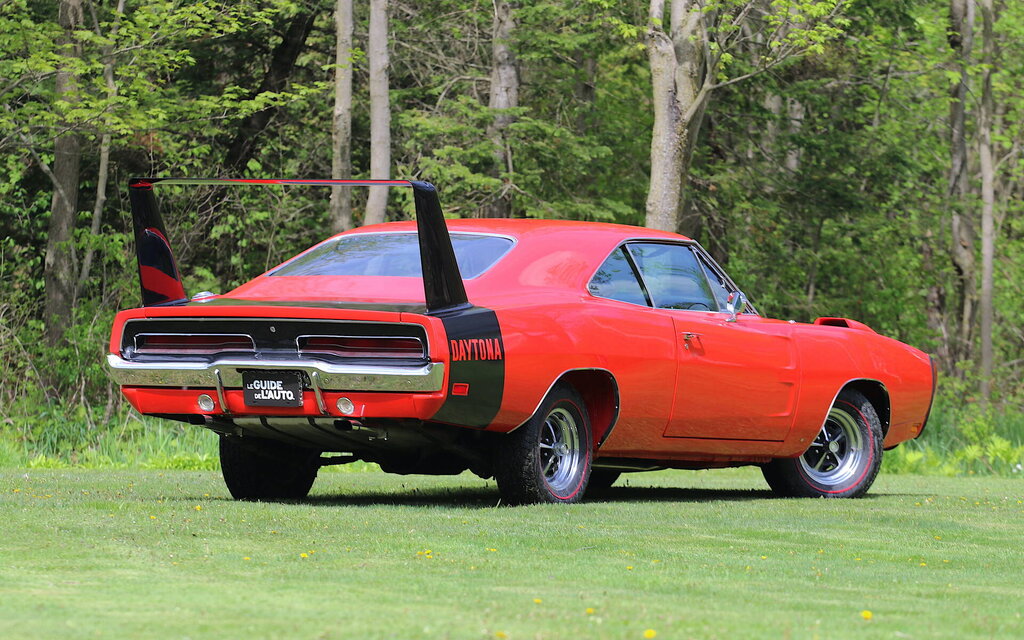
Of course, the wild and uniquely designed Charger Daytona was no ordinary muscle car. With a long, wedge-shaped nose and gigantic rear wing, it was obsessed with aerodynamic performance and winning races, ultimately NASCAR titles. More expensive than the standard Chargers and extremely polarizing due to its unorthodox body, the Daytona enjoyed little success upon its release. Today, however, this automotive unicorn can sell for over a million dollars depending on the car’s condition, engine and history.

Under the hood, two V8 units were available including a 440 Magnum and a 426 Hemi. Both could be paired with a 4-speed manual or 3-speed automatic transmission. The 1969 Charger Daytona we got the opportunity to test drive was beautifully restored in 2017-2018 and featured the 440 V8 along with an autobox—a combination that Jacques Duval recommended back in the day as the 426 Hemi was too racing-focused for road use.
The sheer length of the hood is the first thing that grabbed our attention. Seriously, just look at it! Then there’s the impossibly tall rear spoiler, which is no less impressive, and the bright orange body colour. Needless to say you can't drive anywhere with this car without turning heads.
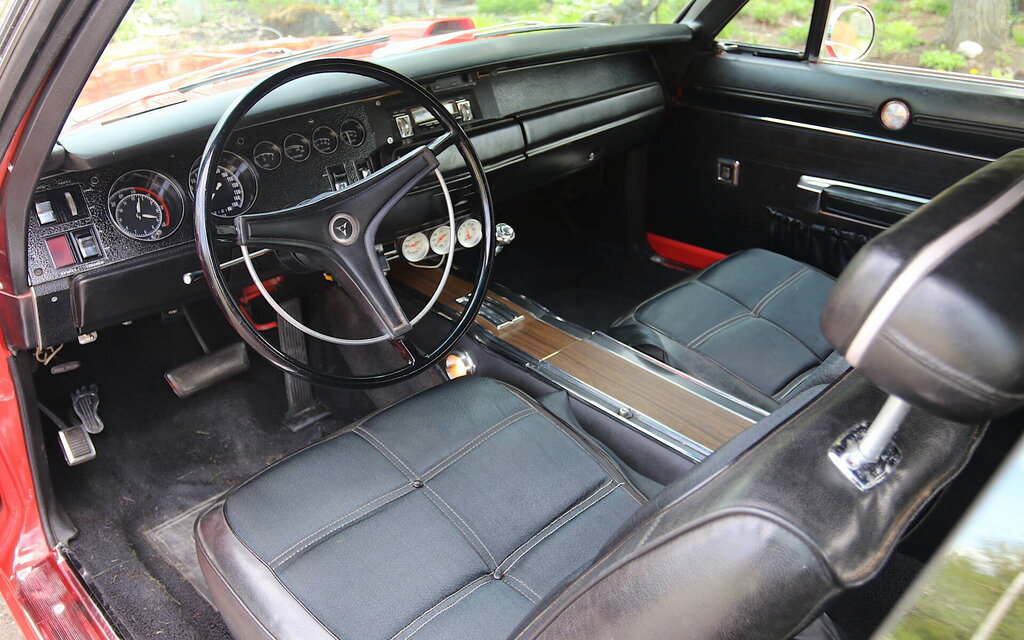
Inside, the conventional and not-so-sporty interior marks a radical contrast with the exterior. It's very understated, with lots of black, although the vinyl/fabric seats (a very rare option) add a singular touch to the overall look. The thin-rimmed steering wheel makes the car’s venerable age loud and clear, while the gauges facing the driver are easy to read.
The V8 settles nicely into idle after firing up. The sound is pleasant—neither too muffled nor too intrusive. Contrary to what one might think, the 1969 Charger Daytona is nothing like an uncontrollable fury. The 440 V8 is as smooth as a lamb at low revs and doesn’t mind gentle driving. Sure, it has less power than the 426 Hemi (375 hp versus 425 hp), but torque is basically even (480 lb-ft versus 490). This is immediately noticeable when accelerating, with the 7.2 litres of displacement ensuring strong and sustained sprints from the lowest revs. The forward surge is not neck-breaking and fades beyond 4,500 rpm. That said, the needle on the speedometer can go up pretty fast.
Steering is vague at best, similar to most American cars at the time, while the small disc brakes don't really encourage spirited driving. But you know what? The 1969 Charger Daytona is still a pleasure to drive, and the very comfortable ride makes you want to stay on the road for hours on end. Whether you love or hate the looks, this is a formidable piece of automotive history and a prized possession for car collectors.
We understand why Jacques Duval found the Charger Daytona irrelevant when it was launched. No one could have predicted that it would later become so popular and valuable. From our experience, though, the Daytona is far from an untameable beast, especially with the 440 V8. Here’s a very pleasant coupe for Sunday drives and a few occasional blasts—provided you can afford one.
We would like to sincerely thank owner Denis St-Cyr for agreeing to let us drive his magnificent Charger Daytona.