2026 Toyota RAV4 vs. 2026 Honda CR-V: The Numbers
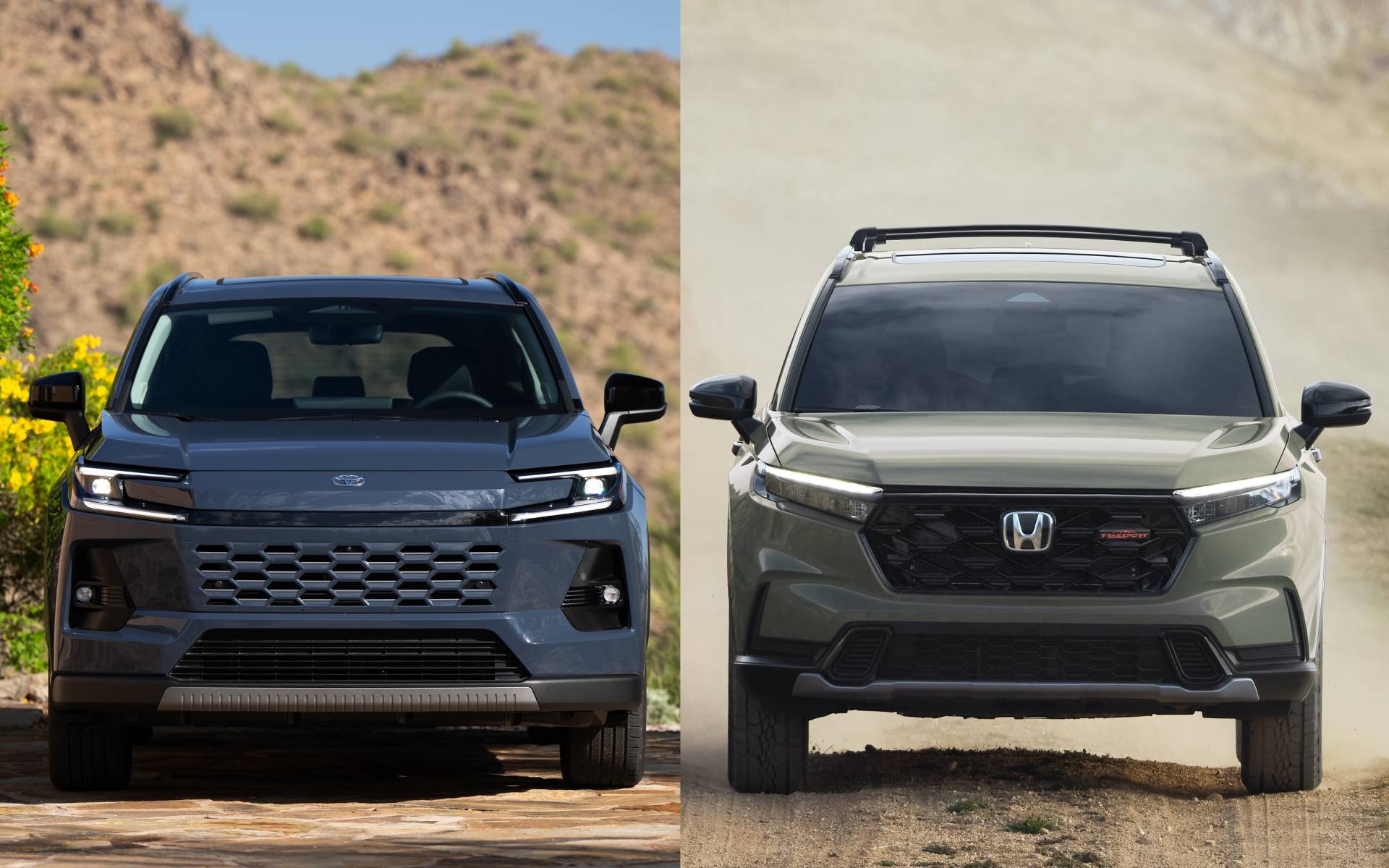

Compact SUVs are an extremely popular segment in Canada, and the two best-selling models will surprise no one: the Toyota RAV4 and Honda CR-V. The former is debuting a new generation for the 2026 model year with an exclusively hybrid lineup, while the latter is getting a few changes of its own including a more adventurous TrailSport model.
If you are hesitating between the two, read on to make the best possible choice.
Read also
Powertrain: Advantage RAV4
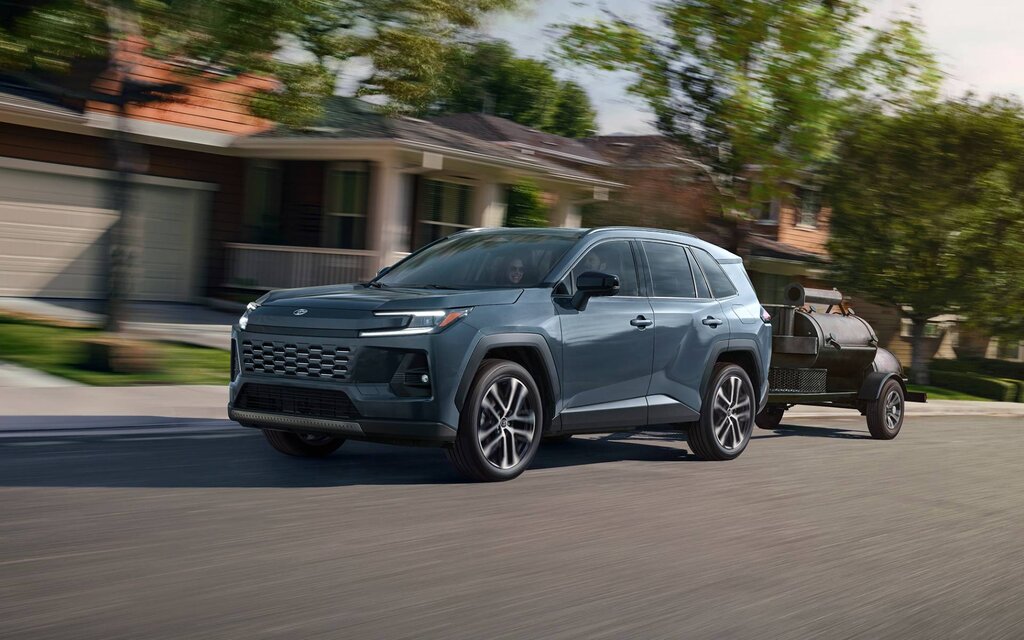
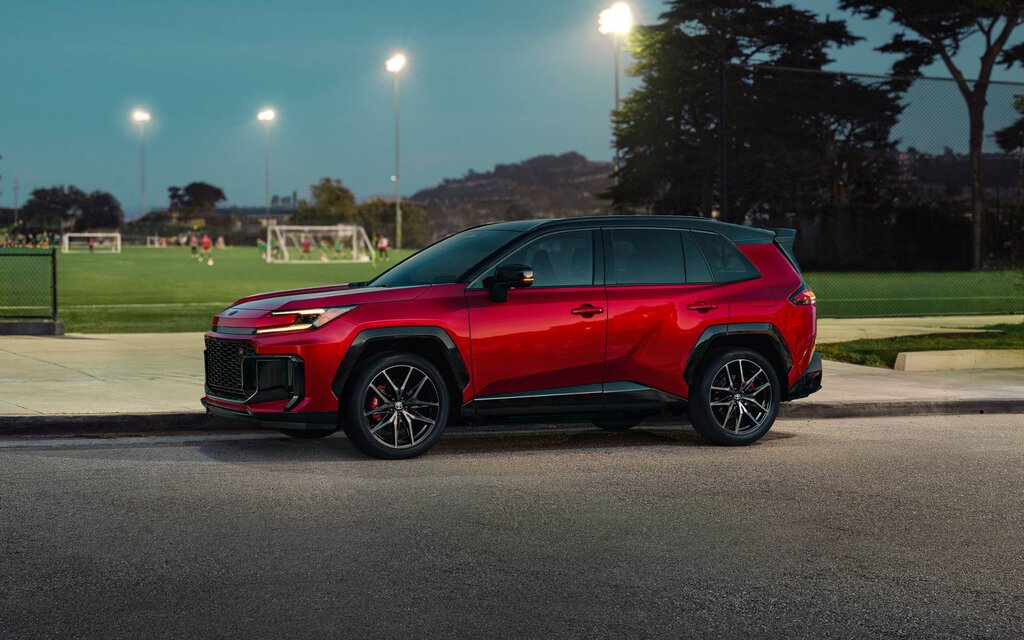
The Toyota RAV4 is dropping gasoline engines for the first time. It now comes standard with a hybrid system whose power has been increased to 236 horsepower. Peak torque is not specified. An electronically controlled continuously variable transmission manages power delivery. The RAV4 Plug-in Hybrid, meanwhile, generates 324 horsepower and accelerates from 0-100 km/h in as little as 5.7 seconds. All-wheel drive is standard on all models.
The Honda CR-V starts with a turbocharged 1.5-litre engine that delivers 190 horsepower and 179 lb-ft of torque, while its optional hybrid system boosts output to 204 horsepower along with 247 lb-ft. The latter adds electronic control to the continuously variable transmission. Unfortunately, the base CR-V is only available with front-wheel drive, while other models come with all-wheel drive.
Although Honda does a very fine job in the powertrain department, Toyota has the edge thanks to superior performance and a PHEV variant that its rival does not offer.
Fuel Consumption: Advantage RAV4
In terms of fuel consumption, the new 2026 RAV4 is exceptional with combined ratings of 5.5-6.2 L/100 km according to Natural Resources Canada. While the RAV4 Plug-in Hybrid's ratings are not yet available at the time of writing, engineers have found a way to increase pure electric range to 82 km, covering most daily commutes even in winter.
As one of the most efficient non-electrified compact SUVs on the market, the turbocharged CR-V achieves 7.8 or 8.4 L/100 km depending on its drivetrain, while hybrid models lower these figures to 6.4-6.7 L/100 km under normal conditions. That’s good, but Honda doesn't quite master the art of fuel economy as well as Toyota.
Capacities: Advantage RAV4
The 2026 Toyota RAV4 has a trunk capacity of 1,070 litres and a towing capacity of up to 3,500 lbs in most trim levels (the base RAV4 LE is limited to 1,750 lbs).
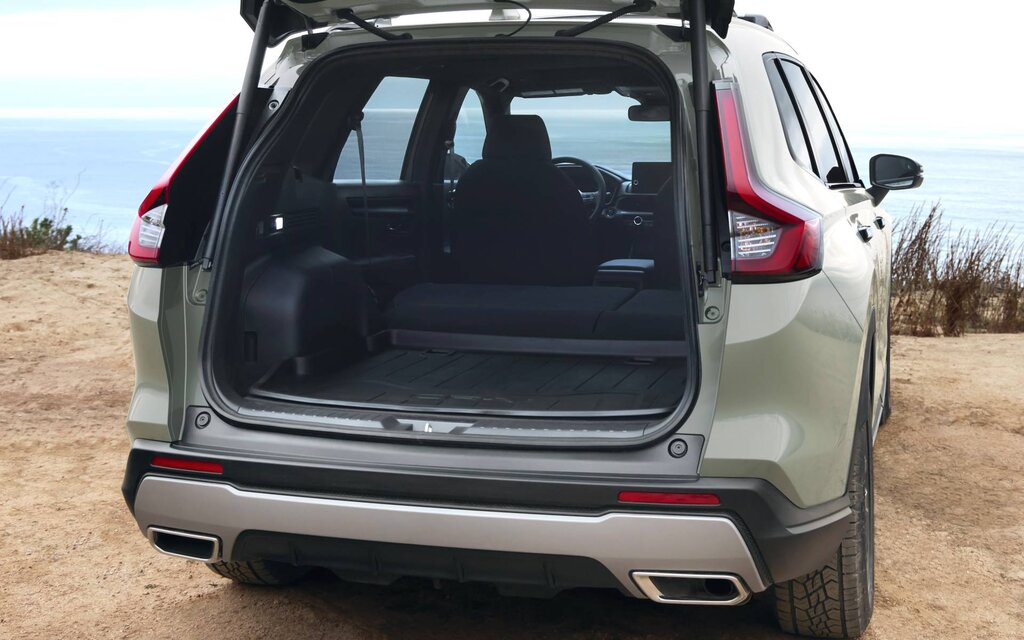
The cargo area of the gasoline-powered Honda CR-V can hold 1,113 litres of luggage, while the CR-V Hybrid offers 1,028 litres. On the other hand, towing capacity (1,500 lbs and 1,000 lbs, respectively) is far from matching the RAV4’s.
As for off-road capability, the ground clearance of the RAV4 and CR-V is very similar, with a very slight advantage for the RAV4 Woodland (216 mm) over the CR-V TrailSport (208 mm).
Infotainment: Advantage RAV4
Completely redesigned and therefore more advanced, the 2026 Toyota RAV4 features a 10.5-inch or 12.9-inch touchscreen, depending on the trim level, paired with a 12.3-inch digital instrument cluster. Available audio systems include six or nine speakers.
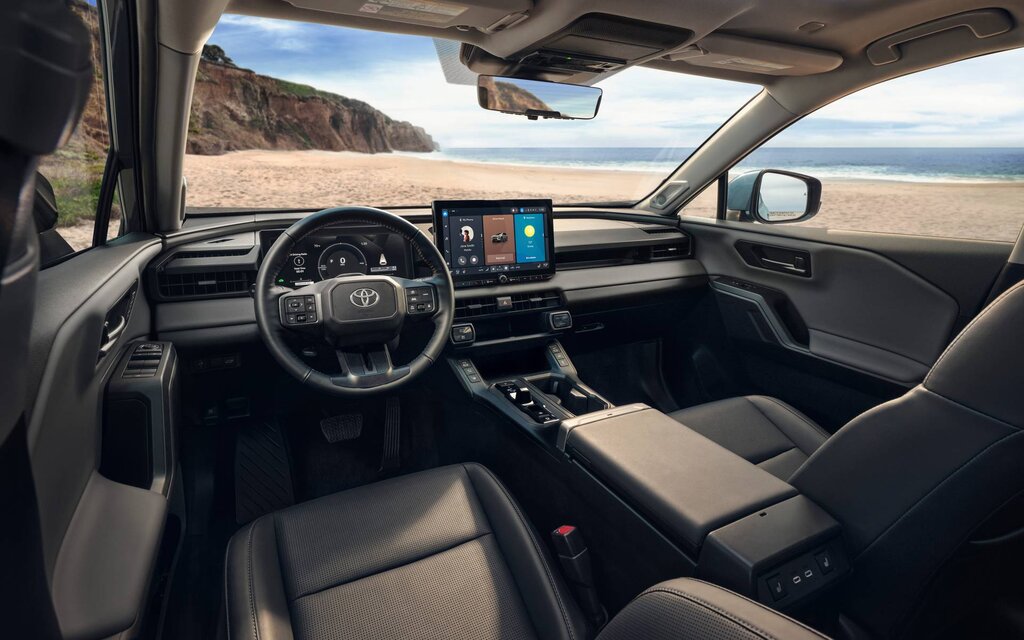
The Honda CR-V’s touchscreen measures only 9 inches, while its digital instrument cluster is 7 inches as standard or 10.2 inches in higher trim levels. Its audio systems have four, six, eight or twelve speakers.
Price: Tie
The 2026 Toyota RAV4 is naturally more expensive than its predecessor. The lineup starts at $37,500 and the top-of-the-line model costs $52,450, not including the various fees. Pricing for the 2026 RAV4 Plug-in Hybrid has not yet been announced.
The Honda CR-V starts at $36,975 and goes all the way up to $51,200. Again, that’s not counting the various fees. While prices are quite similar overall, it’s worth pointing out that the least expensive CR-V Hybrid model carries a base MSRP of $45,900.
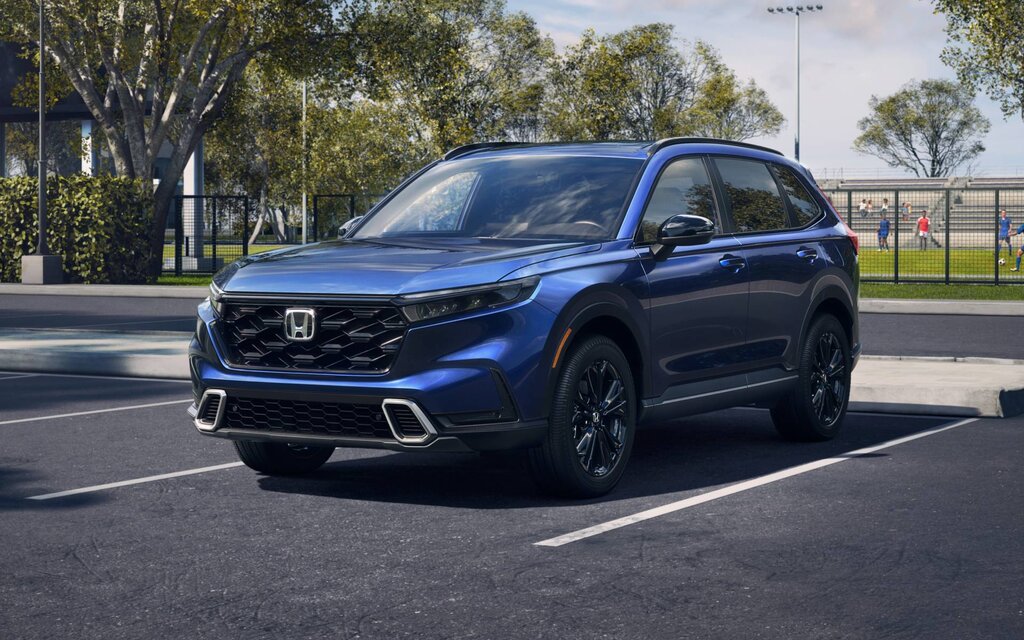
That said, interest rates can make a big difference when it comes to monthly payments. Honda's are slightly lower at the moment, for example 5.49 percent for a 60-month lease compared to 6.69 percent at Toyota.
Warranties: Tie
Both Toyota and Honda cover their vehicles and powertrains for 3 years/60,000 km and 5 years/100,000 km, respectively. Their warranty on hybrid system components is 8 years/160,000 km. Finally, roadside assistance is also the same at 3 years/unlimited km.