2026 Toyota Camry: A Solid Catch
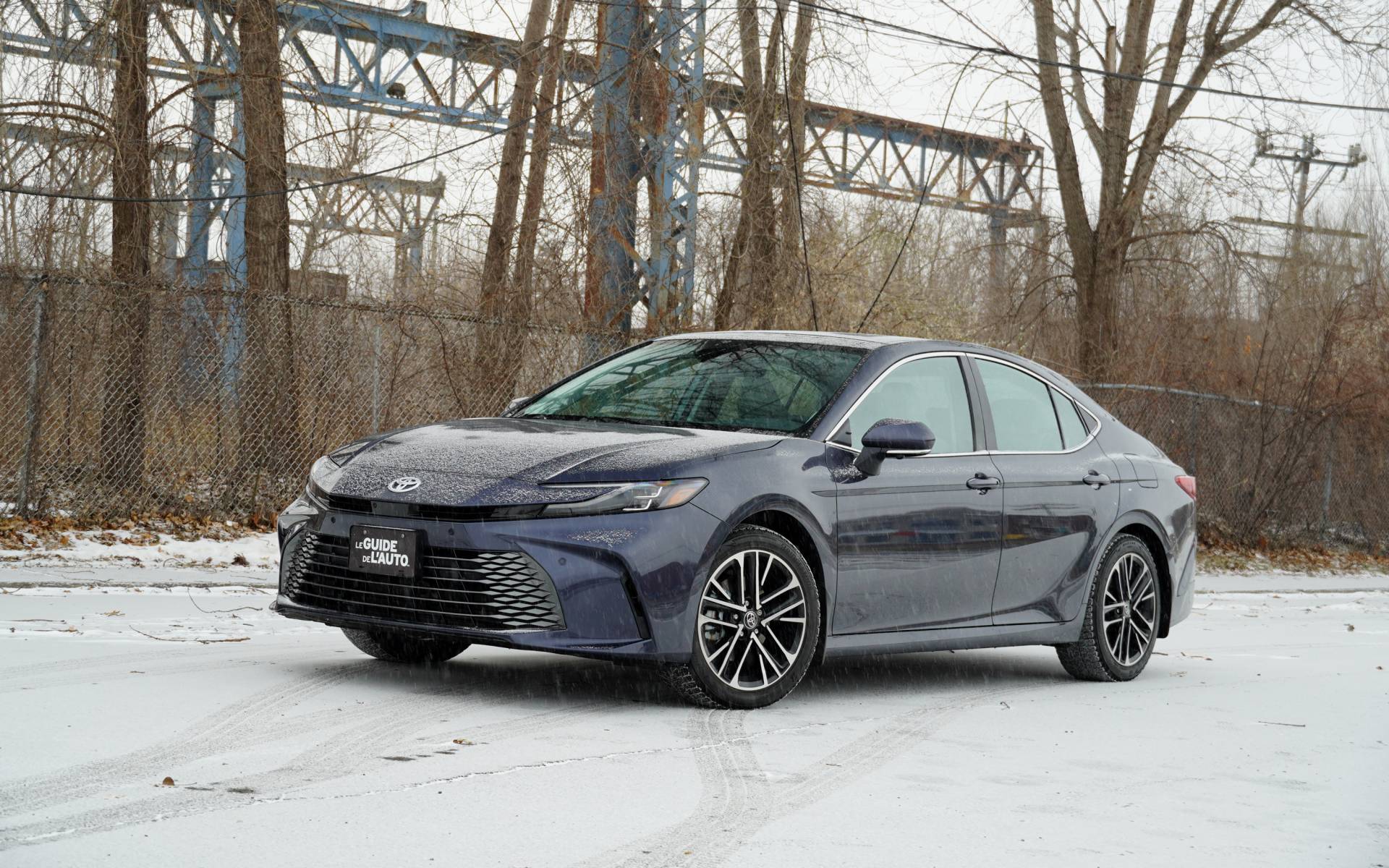

With the proliferation of all things utilitarian in the automotive industry, it’s only natural to question the more traditional option, in other words, what we still call a “car.” Unless you’ve been living under a rock for the past two decades, you already know that so-called passenger cars have been declining in North America—and elsewhere around the globe, for that matter.
While we can debate about the continued presence of the Hyundai Sonata in the wake of Nissan dropping the Altima for 2026, the Honda Accord and Toyota Camry remain firmly anchored in their respective lineups.
Read also
Detractors will be quick to label both of these midsize sedans as “your grandpa’s car,” but the reality is a bit more nuanced—even if comfort and fuel efficiency prevail over performance and handling. We took advantage of the holiday season to revisit the strengths and weaknesses of the 2026 Toyota Camry XLE AWD. Here’s what we learned from our cold, snowy, icy and windy test drive—ideal conditions to see what it’s really made of.
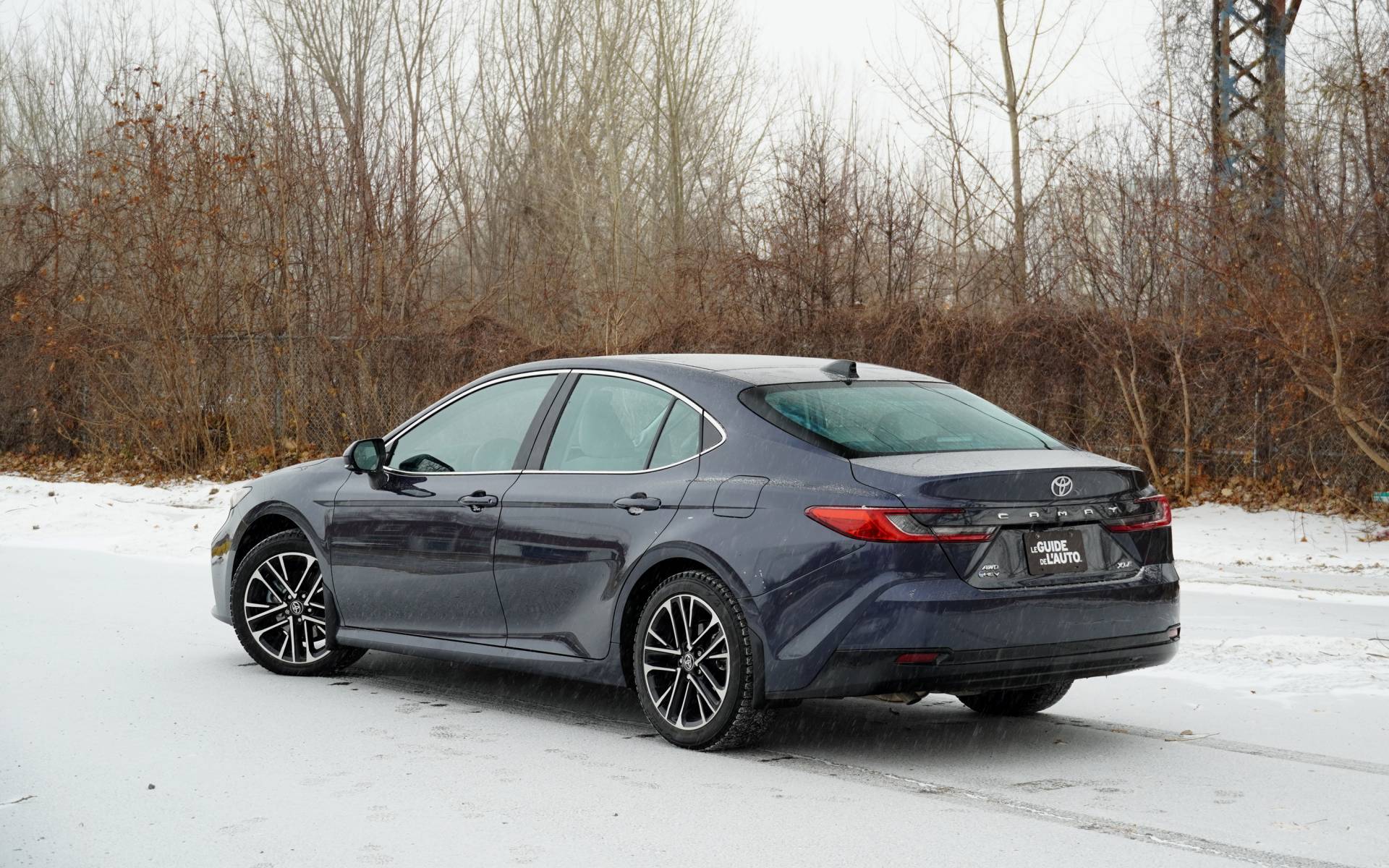
AWD-Equipped and Fuel-Efficient
At the heart of the Camry XLE—equipped as standard with a third electric motor on the rear axle to provide all-wheel drive—is a hybrid powertrain that pairs a naturally aspirated 2.5-litre four-cylinder engine with three electric motors, a small battery pack and a continuously variable transmission.
With 232 horsepower under your right foot, the Camry—now offered exclusively as a hybrid—edges closer to the output previously delivered by the V6-powered Camry (300 hp) while posting a significantly lower fuel consumption rating. Because the AWD system relies primarily on the rear-mounted electric motor, which only engages when road conditions deteriorate, the Camry XLE AWD achieves a combined 5.1 L/100 km according to Natural Resources Canada, compared to 9.2 L/100 km for the discontinued six-cylinder Camry.
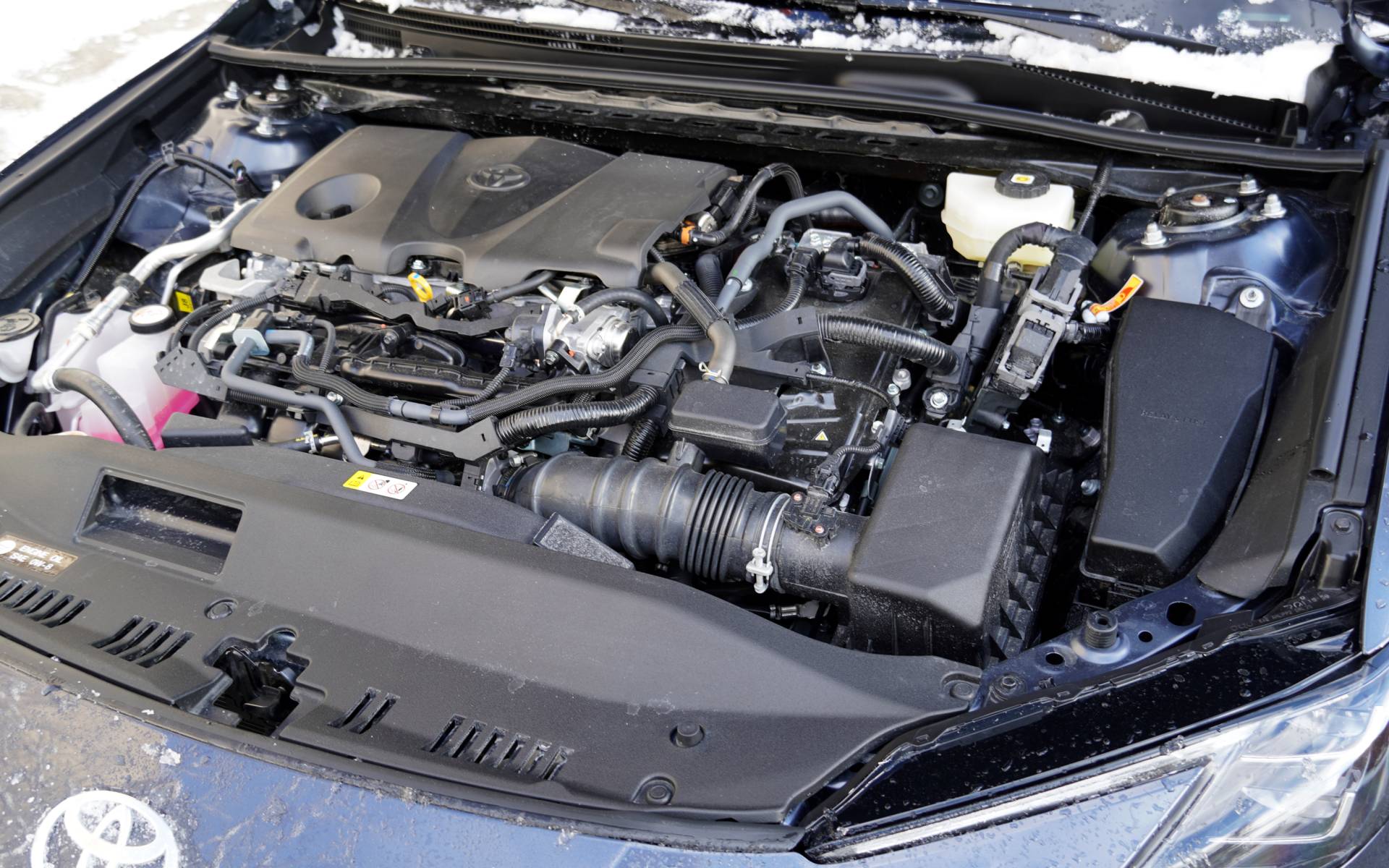
In real-world winter driving, however, it was more like 7.4-7.7 L/100 km. Bear in mind, we used the heated seats, heated steering wheel and climate control quite a bit and made the most of the entire powertrain—including an AWD system that worked overtime. Some may see this as disappointing, but we believe that a midsize sedan hauling a family of four and their luggage that manages to stay under 8.0 L/100 km without any conscious effort to hypermile is a legitimate win.
Hybrid—and Fun?
The 2026 Toyota Camry XLE AWD represents the most sensible choice in the lineup, featuring softer suspension tuning than the XSE AWD model. This compliance is a blessing when winter brings an abundance of potholes that punish thousands of vehicles daily. The sedan’s rigid chassis also inspires confidence behind the wheel. Here we have another example of a solidly built, well-balanced Toyota product.
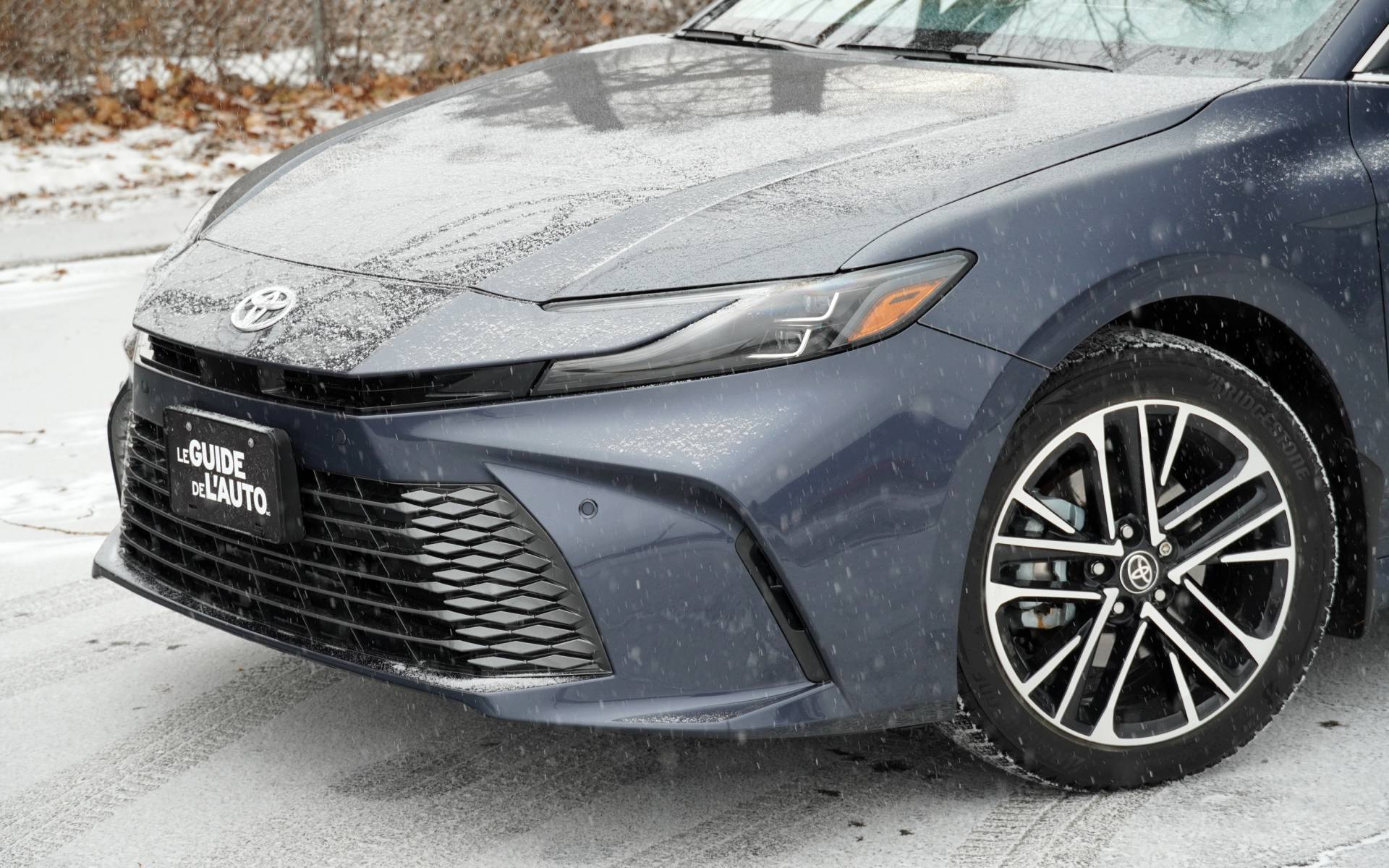
Despite its reputation as a relaxed, dare we say boring car, can the Camry put a smile on the driver’s face? Of course, compared to its Gazoo Racing-derived siblings, the XLE AWD model is no match in terms of engine sound, handling and steering precision.
That said, sporty driving has never been the Camry’s primary purpose. From the very beginning, the venerable Toyota sedan has prided itself on delivering high levels of comfort and reliability first and foremost. The available Sport mode falls well short of the brand’s true performance offerings. Sure, the heavier steering and slightly sharper powertrain response are nice, but at the risk of sounding like a broken record, the Camry is far more interested in pampering its occupants.
A Traditional Formula
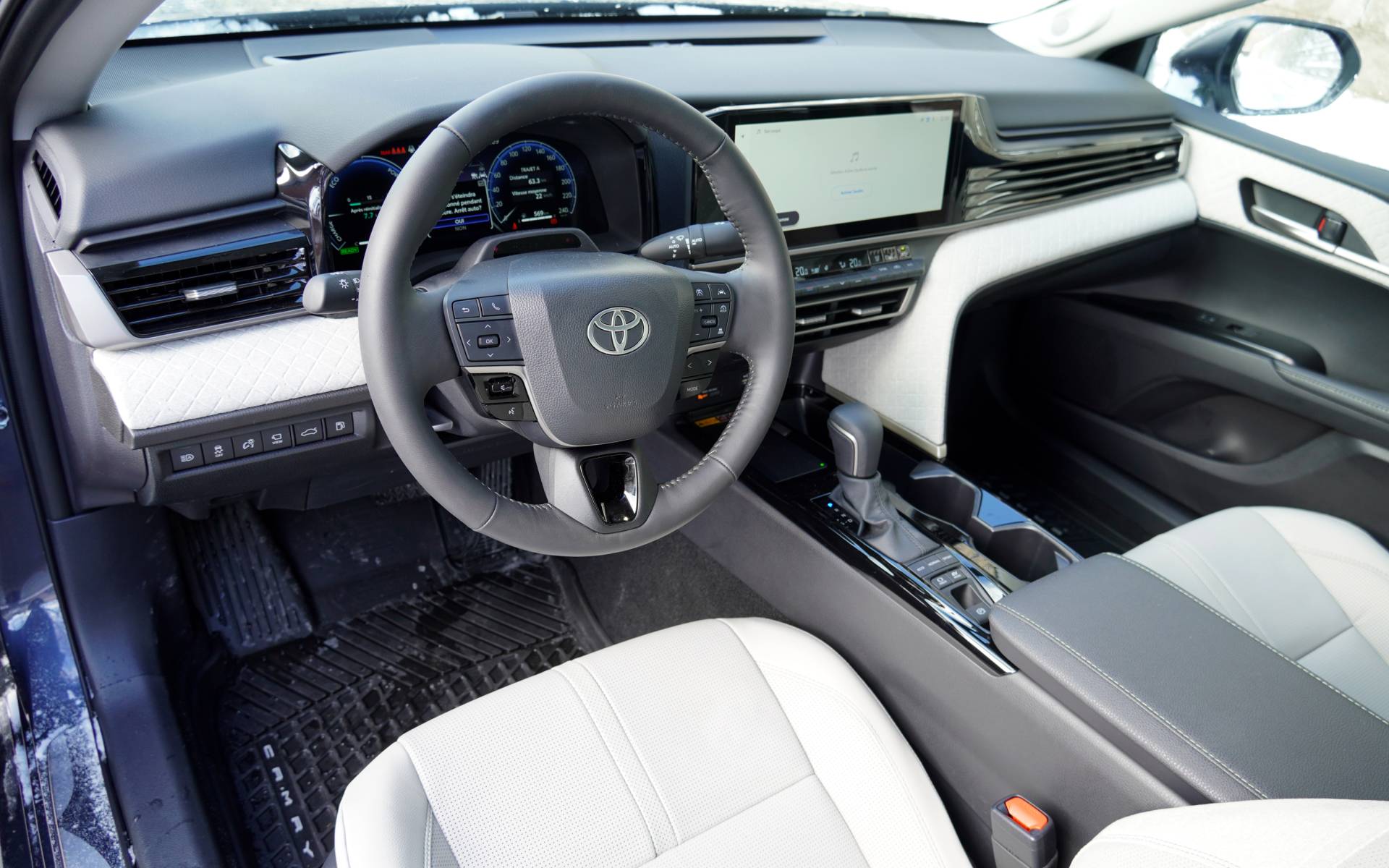
The Toyota Camry may belong to a segment that has lost ground to SUVs and crossovers in recent years, but that doesn’t make it outdated. On the contrary, these two weeks behind the wheel gave us plenty of time to appreciate its excellent ergonomics, with piano-style physical buttons for climate control, a conventional gear selector and a digital environment that’s easy to live with daily.
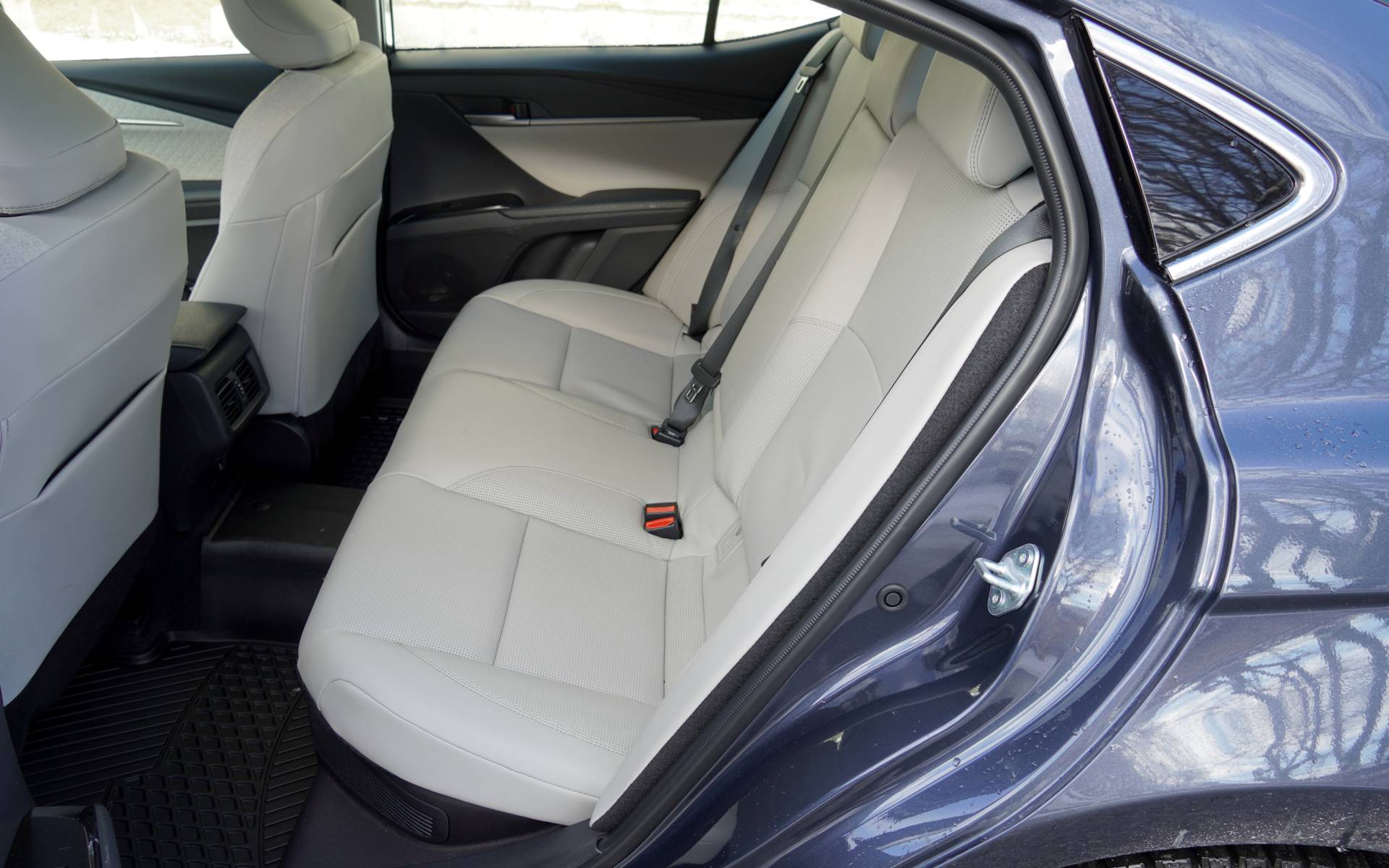
The only real flourish in the cabin is the two-tone design including a dashboard extension that wraps around the front passenger’s legs. In terms of space and seating, the Camry has little to fault. Both rows are very accommodating, while the trunk is deep enough to fit bulkier items.
What about pricing? The 2026 Toyota Camry XLE AWD carries an MSRP of $45,225 (plus fees, options and taxes), making it significantly more expensive than a Hyundai Sonata Hybrid ($36,199) yet cheaper than a Honda Accord Touring ($46,200). Don’t forget that it also has some of the lowest maintenance costs in the industry. In a sea of high-riding vehicles a.k.a. SUVs, the Camry is still a solid catch.