Toyota Opens ‘Woven City’ in Japan to Test Future Mobility Solutions
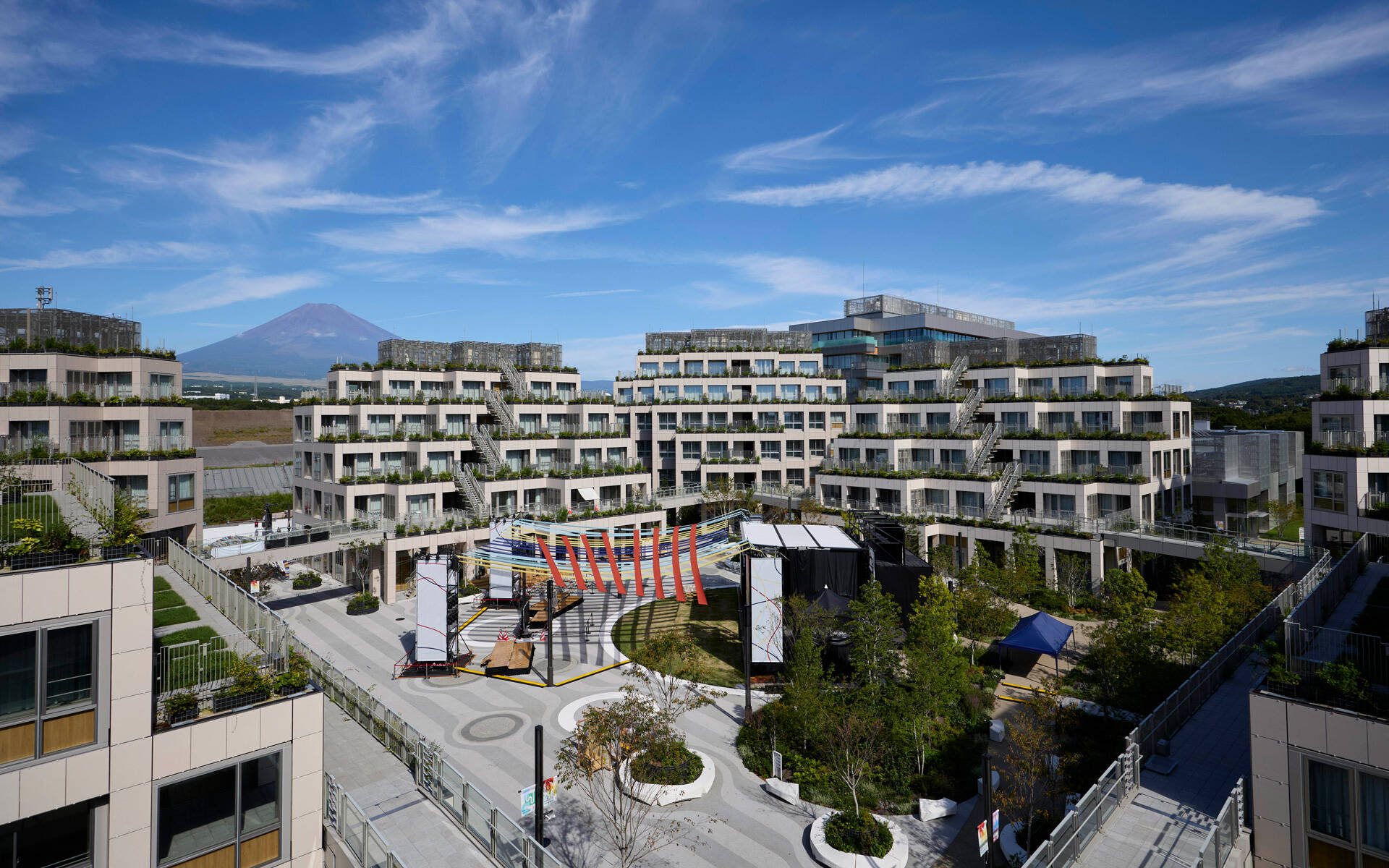

Toyota’s plan to build an entire city at the foot of Mount Fuji to test autonomous vehicles and future mobility, announced at CES 2020 in Las Vegas, has finally come to fruition with the official inauguration of Woven City.
The location will serve as a “living laboratory” where researchers can test and develop technologies such as autonomy, robotics, personal mobility, smart homes and artificial intelligence in a real-world environment, Toyota explained.
Read also
Replacing a disused Toyota factory and covering an area of 175 acres (the equivalent of 158 American football fields), Woven City is a collaboration between the Japanese automaker and Woven by Toyota (WbyT).
Two Types of Participants
It all starts with what Toyota calls ‘Inventors.’ These are companies, startups, entrepreneurs, research institutions and other innovators developing and testing products and services in Woven City. By combining Toyota's manufacturing expertise, WbyT's advanced software capabilities, as well as the unique strengths of each Inventor, Woven City seeks to foster Kakezan―a Japanese concept of "multiplication" where new innovation and societal value emerge from the convergence of different ideas and capabilities, according to the press release.
Then there will be residents and visitors, known as ‘Weavers.’ In fact, as of this month, several Toyota Group employees and their families have begun living in Woven City as the first Weavers. By experiencing the products and services first hand and providing feedback, Weavers will play a key role in shaping new mobility innovations.

Phase 1 is expected to accommodate about 300 residents, but the long-term plan is to host approximately 2,000. General visitors will be welcomed starting in 2026.
From Cars and Shuttles to Pet Robots
"This is a test course for the future, not just a town," Toyota's chairman Akio Toyoda told the crowd during the opening ceremony. His son, Daisuke Toyoda, is the one leading the project.

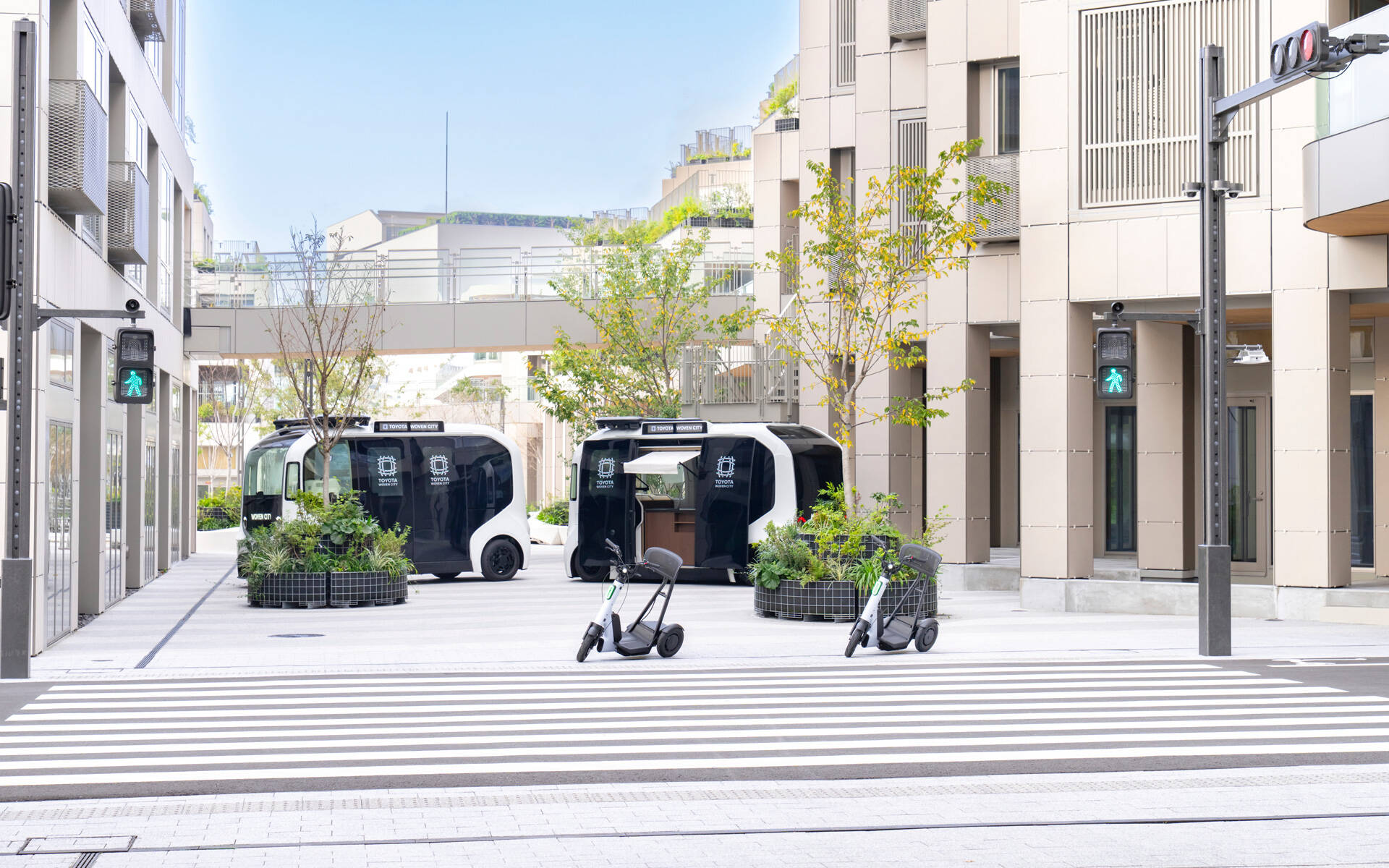
Among the vehicles being tested at Woven City are Toyota’s e-Palette self-driving buses, which feature a versatile platform including food and beverage offerings and other mobility service applications. Personal mobility vehicles such as compact, three-wheeled EVs will also be developed, plus self-guided robots and even pet robots.
Various Testing Infrastructures
Woven City’s ground-level roads are classified into three types―one exclusively for pedestrians, one shared by pedestrians and personal mobility, and one dedicated to vehicles. A fourth, underground road enables testing unaffected by weather or temperature conditions.
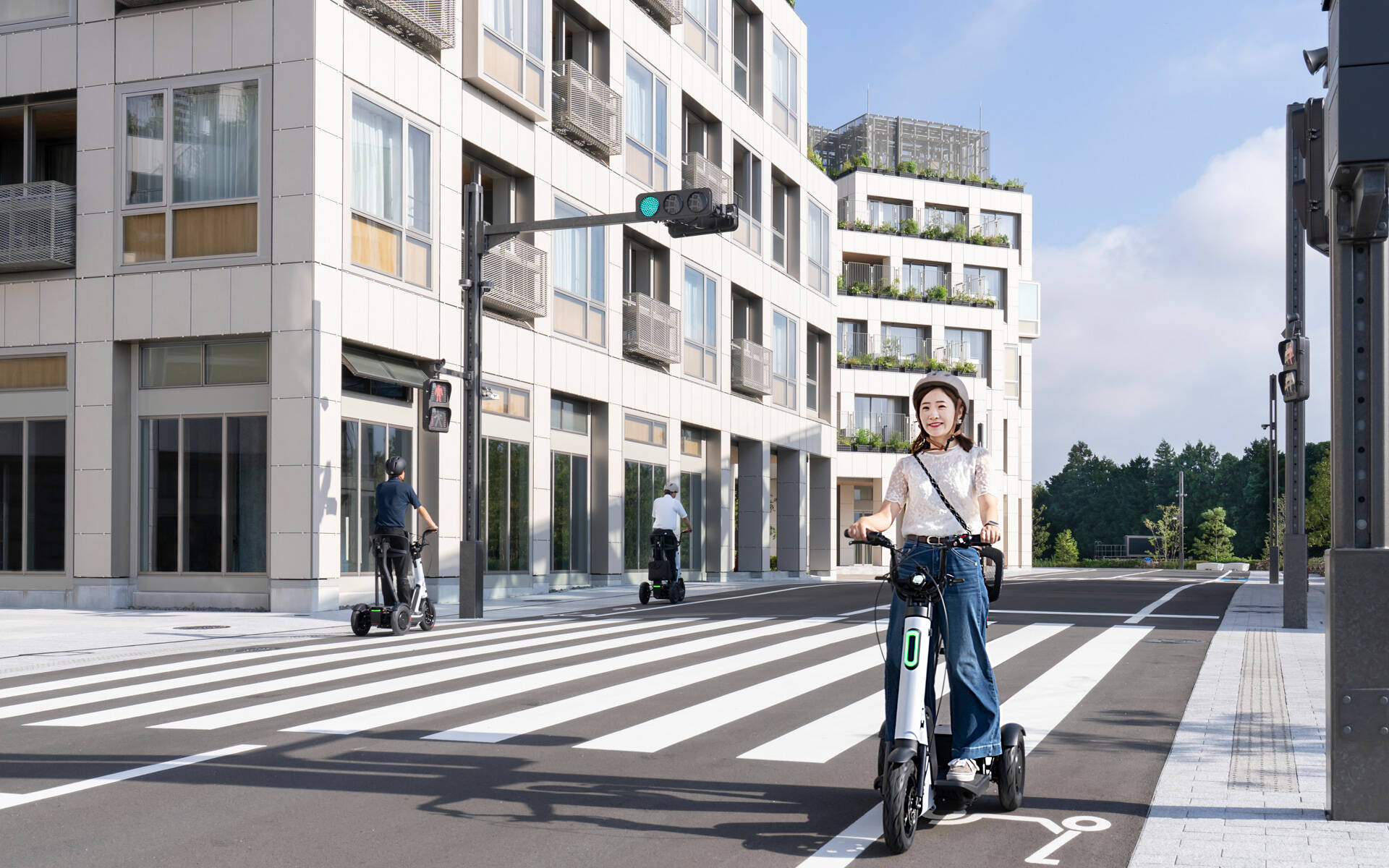
Finally, throughout the city, a state-of-the-art system that coordinates traffic signals with mobility will advance safety. Multifunctional poles serving as both streetlights and traffic signal posts can also host sensors and cameras used in testing and co-creation activities, Toyota said.