Just 4 Out of 18 Compact SUVs Ace This New Safety Test
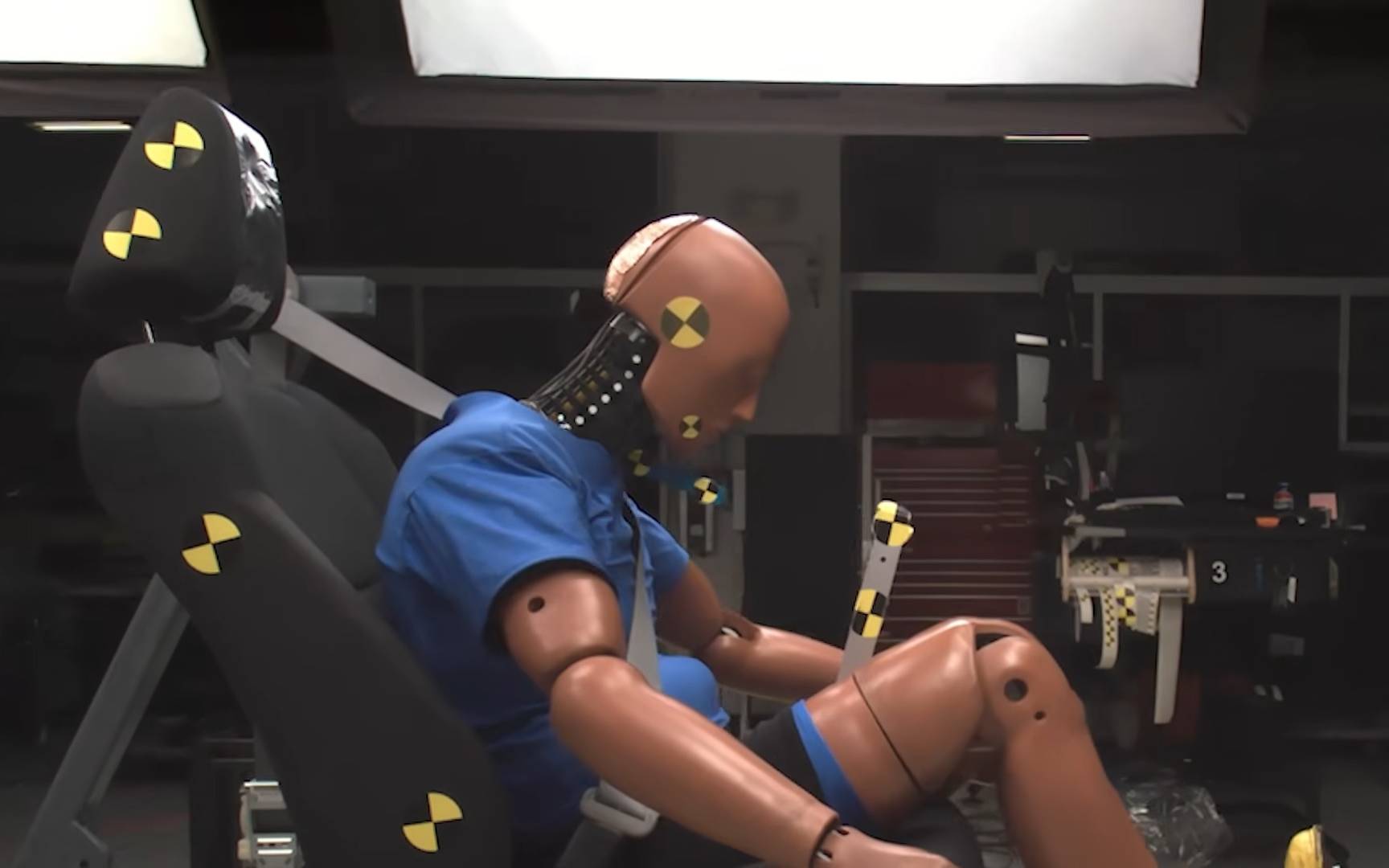

The U.S. Insurance Institute for Highway Safety, which performs a variety of collision tests on new vehicles, recently updated its whiplash prevention test and found that only four out of the first 18 compact SUVs tested earn a good rating.
“Neck sprains and strains are the most frequently reported injuries in U.S. auto insurance claims,” IIHS President David Harkey said. “This new test challenges automakers to further improve their seats and head restraints to provide better protection in the rear impacts that typically cause these injuries.”
Read also
- IIHS Hands Out Final Top Safety Pick Awards for 2025
- Seven EVs Were Crash-Tested by IIHS, See How They Fared
The four good-rated SUVs include the Hyundai Ioniq 5, Subaru Forester, Toyota RAV4 and Audi Q3. For the last two, the IIHS tested 2025 models and not next-generation 2026 models. However, it’s safe to assume the results would be similar.
Nine other compact SUVs earn an acceptable rating including the Buick Encore GX, Chevrolet Equinox, Honda CR-V, Jeep Compass, Kia Sportage, Mercedes-Benz GLB, Mitsubishi Outlander, Volkswagen Taos and Volvo XC40. The IIHS says the BMW X1 and Nissan Rogue offer marginal protection, while the Ford Bronco Sport, Hyundai Tucson and Mazda CX-50 get a poor rating.
How Does the New Whiplash Test Work?
For the new seat and head restraint evaluation targeting neck injuries stemming from rear-end crashes, the IIHS uses a midsize male dummy complete with an articulated spine. The driver seat is removed from the vehicle and secured to a sled that delivers a sudden pulse of acceleration to simulate the effect of a stationary vehicle being struck from behind, as the following video shows:
Unlike the old test, which the IIHS eliminated in 2022 because virtually all vehicles on the market were getting a good rating, this one is carried out at two different speeds—20 mph (32 km/h) and 30 mph (48 km/h).
Some of the metrics in the evaluation include head contact time (how long it takes for the head restraint to reach the back of the dummy’s head) and acceleration of the T1 vertebra (the last vertebra of the upper spine where it joins the neck). There’s pelvis displacement, which is a measure of how well the seat absorbs the crash energy. Ideally, a passenger that is rear-ended should sink into the seatback so that the pelvis is prevented from moving forward relative to the head.
Meanwhile, an effective head restraint should keep the head in its natural upright position. If the restraint pushes on the head below or above the head’s center of gravity, the chin will jerk up and away from the chest or down and toward the chest.
“We don’t yet fully understand the mechanisms that cause whiplash injuries,” said Marcy Edwards, the IIHS senior research engineer who developed the new evaluation. “But our research makes us confident that reducing these types of movements and stresses should cut down on whiplash injuries in the real world.”